How do you match soybean herbicide traits with the right weed control program? First, identify the herbicide tolerance traits in the soybean variety you are planting. Then confirm that every planned herbicide is specifically labeled for that crop, trait system, application timing, and location. Roundup Ready 2 Xtend®, XtendFlex®, and Enlist E3® soybeans have different herbicide tolerances, and those differences determine which weed-control options growers can use safely and legally.
Choosing the right Mustang Seeds soybean variety is only the beginning. Protecting yield potential also requires an effective weed management program that fits the variety’s traits, the weeds present in the field, and current pesticide regulations.
An application mistake can result in soybean injury, poor weed control, off-target damage, and regulatory consequences.
The goal is to build a program in which the soybean genetics, herbicide tolerance traits, and weed-control practices work together.
Why Soybean Herbicide Trait Compatibility Matters
Herbicide tolerance traits allow soybean plants to tolerate specific herbicide active ingredients when those products are used according to their labels.
However, trait tolerance and herbicide registration are not the same thing.
A variety may be genetically tolerant to a herbicide, but that does not mean every formulation containing that active ingredient is approved for application over the growing crop.
Growers must confirm:
The exact soybean trait package.
The herbicide product’s current registration.
Whether the product is labeled for preplant, preemergence, or postemergence use.
Crop growth-stage restrictions.
State and county restrictions.
Required application equipment, buffers, weather conditions, and training.
Understanding these differences is particularly important when using dicamba- and 2,4-D-based weed-control systems.
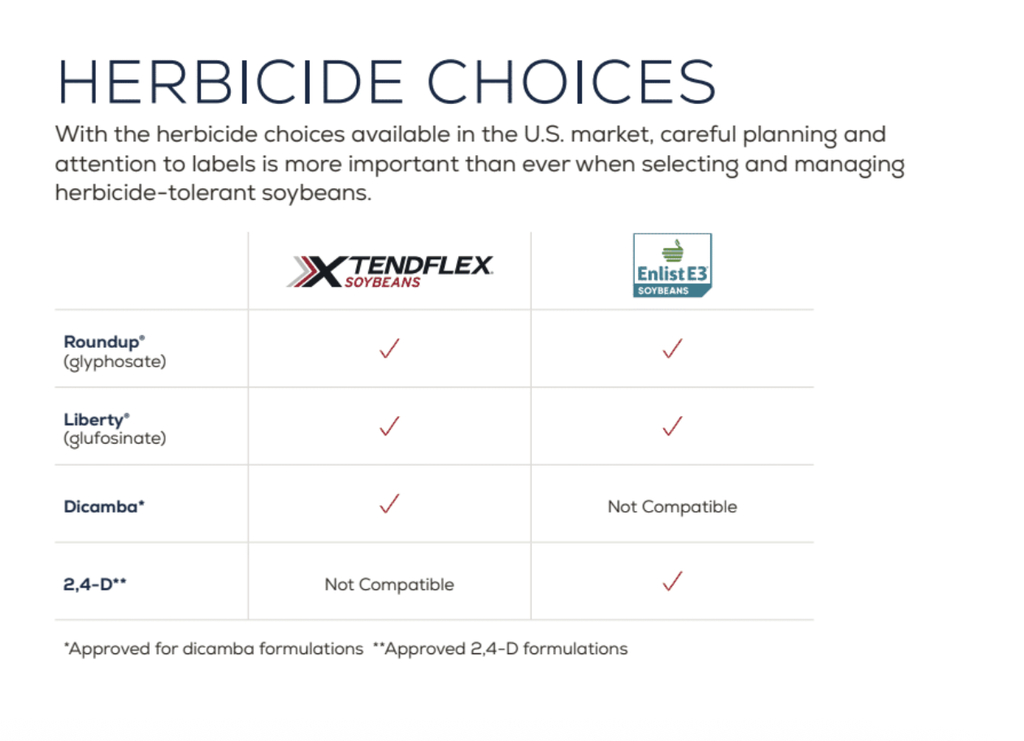
Soybean Herbicide Trait Compatibility Chart
The following table summarizes the primary herbicide tolerances associated with three soybean trait platforms.
Soybean trait system
Glyphosate
Glufosinate
Dicamba
2,4-D choline
Roundup Ready 2 Xtend®
Tolerant
Not tolerant
Tolerant
Not tolerant
XtendFlex®
Tolerant
Tolerant
Tolerant
Not tolerant
Enlist E3®
Tolerant
Tolerant
Not tolerant
Tolerant
This table describes genetic herbicide tolerance, not permission to apply a particular product. Only use herbicides specifically labeled and authorized for the selected soybean trait system. Verify the seed tag, current product label, and state requirements before application.
What the Chart Means for Your Farm
All three platforms provide glyphosate tolerance.
XtendFlex and Enlist E3 soybeans also provide glufosinate tolerance.
Dicamba tolerance is associated with Roundup Ready 2 Xtend and XtendFlex soybeans.
Enlist E3 soybeans provide tolerance to 2,4-D choline used in authorized Enlist herbicide products.
These distinctions should be considered before purchasing seed and developing the season’s herbicide plan.
Glyphosate Tolerance: A Common Feature Across Major Systems
Glyphosate is a Group 9 herbicide used to control susceptible grasses and broadleaf weeds.
Roundup Ready 2 Xtend, XtendFlex, and Enlist E3 soybeans all provide glyphosate tolerance.
However, glyphosate tolerance does not guarantee effective weed control.
Some weed populations, including certain waterhemp, Palmer amaranth, and horseweed populations, have developed glyphosate resistance.
Best Practices for Glyphosate Programs
Identify the weed species present.
Evaluate known herbicide resistance in the field.
Use effective residual herbicides where appropriate.
Apply postemergence herbicides when weeds are within labeled size limits.
Combine effective herbicide sites of action when justified.
Scout after application to evaluate control.
Glyphosate should be part of a comprehensive weed management strategy rather than the only tool used throughout the season.
Glufosinate Tolerance: XtendFlex and Enlist E3 Soybeans
Glufosinate is a Group 10 herbicide that can help manage certain weeds resistant to other herbicide groups.
XtendFlex and Enlist E3 soybeans are tolerant to glufosinate.
Roundup Ready 2 Xtend soybeans do not carry glufosinate tolerance as part of that trait package.
Do not apply glufosinate over Roundup Ready 2 Xtend soybeans unless the specific variety carries separately verified tolerance and the application is labeled.
Glufosinate Application Considerations
Glufosinate performance depends on several factors, including:
Weed species and size.
Spray coverage.
Application timing.
Weather conditions.
Labeled application rate.
Product-specific restrictions.
Because glufosinate primarily acts through contact activity, adequate coverage is important.
Always follow the product label for nozzle selection, spray volume, adjuvants, and environmental conditions.
Dicamba-Tolerant Soybeans: Understanding the 2026 Registration Update
However, dicamba tolerance does not authorize the use of every dicamba herbicide over those crops.
Which Dicamba Products Are Approved for 2026 and 2027?
In February 2026, the U.S. Environmental Protection Agency approved three products for over-the-top application to dicamba-tolerant soybeans and cotton for the 2026 and 2027 growing seasons. [1]
Tavium® Plus VaporGrip® Technology, EPA Registration No. 100-1753.
These registrations are time-limited and subject to extensive use restrictions.
Older product registrations and historical application guides should not be used as substitutes for current labeling.
Important Dicamba Application Requirements
The 2026 federal registration framework includes requirements addressing:
Restricted-use pesticide classification.
Certified applicator requirements.
Annual dicamba-specific training.
Application rates and annual use limits.
Approved volatility reduction agents.
Weather and temperature restrictions.
Drift mitigation and buffer requirements.
Protection of sensitive plants and neighboring fields.
State-specific restrictions.
The EPA also prohibits applications when the temperature is forecast to reach or exceed 95°F on the day of application or the following day. [1]
The current product label controls. Additional restrictions may apply, and registration does not mean an application is permitted in every location or under every set of conditions.
Why This Matters
Dicamba can injure sensitive broadleaf plants through off-target movement.
That makes product selection, application conditions, equipment setup, and compliance especially important.
Before making an application, confirm the product’s current registration and all federal, state, and local requirements.
Enlist E3 soybeans provide tolerance to three herbicide active ingredients:
Glyphosate.
Glufosinate.
2,4-D choline.
However, Enlist E3 tolerance does not mean growers can apply any 2,4-D formulation over the crop.
Which 2,4-D Products Are Authorized?
According to the Enlist weed control system’s 2026 product use guide, Enlist One® and Enlist Duo® are the authorized 2,4-D-containing herbicides for in-crop use on Enlist E3 soybeans. [2]
Enlist One contains 2,4-D choline.
Enlist Duo combines 2,4-D choline and glyphosate.
Both products have specific label requirements.
Traditional 2,4-D formulations should not be substituted for authorized Enlist products in postemergence applications.
Enlist E3 Application Considerations
Before applying an Enlist herbicide:
Verify that the field is planted to Enlist E3 soybeans.
Confirm the herbicide is registered for use in the state and county.
Review the labeled crop growth-stage window.
Check approved tank-mix partners.
Follow nozzle, buffer, wind, and other application requirements.
Document the application.
The Enlist system’s product guidance identifies applications through the R1 growth stage for Enlist E3 soybeans, subject to the current product label. [2]
Why 2,4-D Formulation Matters
Different formulations of the same herbicide active ingredient can have different registrations, volatility characteristics, and application requirements.
A product being labeled for preplant burndown does not automatically make it legal for postemergence use.
For Enlist E3 soybeans, use only the specifically authorized products for the intended application.
Preplant Burndown: Why Trait Compatibility Still Matters
One common misconception is that herbicide tolerance only matters after soybeans emerge.
In reality, preplant applications require careful attention to product-specific planting intervals and restrictions.
A herbicide used before planting may injure the following soybean crop if the application does not meet the label’s requirements.
Example: Dicamba Before Planting Enlist E3 Soybeans
Enlist E3 soybeans are not dicamba-tolerant.
A dicamba-containing burndown program may still be possible before planting, but only when the selected product is labeled for that use and all required plant-back intervals and conditions are satisfied.
The appropriate interval can depend on the product, application rate, rainfall, and other label-specific factors.
Do not assume that a short interval between spraying and planting is safe.
Example: 2,4-D Before Planting Dicamba-Tolerant Soybeans
XtendFlex and Roundup Ready 2 Xtend soybeans are not inherently tolerant to 2,4-D choline.
Preplant applications of 2,4-D products must follow the applicable label, including planting intervals and restrictions.
The presence of dicamba tolerance does not provide 2,4-D tolerance.
Preplant Burndown Checklist
Before spraying, verify:
Which soybean variety will be planted.
The variety’s herbicide tolerance traits.
The exact burndown product and active ingredients.
Required planting intervals.
Application rate restrictions.
Rainfall or environmental conditions specified by the label.
Any additional state restrictions.
Reviewing the seed order and burndown program together can prevent avoidable mistakes.
Build a Soybean Weed Control Program Beyond Herbicide Tolerance
Herbicide-tolerant traits provide flexibility, but successful weed control depends on the entire management program.
Start With Field History
Review which weeds were difficult to control during previous seasons.
Pay particular attention to:
Waterhemp.
Palmer amaranth.
Horseweed.
Giant ragweed.
Volunteer corn.
Other locally important weeds.
Identify known or suspected herbicide resistance before selecting a program.
Use Residual Herbicides Where Appropriate
Soil-applied residual herbicides can help reduce early weed competition and decrease reliance on postemergence applications.
Choose products based on weed spectrum, soil conditions, crop rotation, and label restrictions.
Target Small, Actively Growing Weeds
Postemergence applications are generally more effective when weeds are within labeled size limits and environmental conditions favor control.
Waiting until weeds become large can reduce control and increase competition with the soybean crop.
Use Multiple Effective Sites of Action
Combining or rotating herbicides with different effective sites of action can help manage herbicide resistance.
However, multiple herbicides do not automatically provide multiple effective sites of action if the weed population is already resistant to one of them.
Use local resistance information when evaluating herbicide choices.
Scout After Applications
Return to treated fields to assess weed control.
Surviving weeds may indicate application problems, unfavorable conditions, late emergence, or resistance.
Document the results to improve future weed management decisions.
Herbicide Application Safety and Compliance Checklist
Before application
What to confirm
Soybean variety
Exact trait package planted
Herbicide product
Current registration and labeled crop use
Application timing
Preplant, preemergence, or postemergence authorization
Crop stage
Growth-stage restrictions
Weed stage
Species and maximum labeled weed size
Weather
Wind, temperature, and other label requirements
Neighboring crops
Sensitive plants and required buffers
Tank mix
Approved partners, adjuvants, and mixing directions
Applicator
Certification and training requirements, if applicable
Records
Product, rate, field, timing, weather, and application details
This checklist supports preparation but does not replace the pesticide label.
Frequently Asked Questions About Soybean Herbicide Traits
What should growers do if a field contains two different soybean trait systems?
Identify the exact boundaries of each trait system before spraying.
A herbicide authorized for one soybean trait system may severely injure plants carrying another.
If field boundaries or planting records are uncertain, do not make a trait-specific postemergence application until the crop identity is confirmed.
Maintain accurate seed and field records to avoid this problem.
Can spray tank contamination injure herbicide-tolerant soybeans?
Yes. Herbicide residues left in tanks, hoses, booms, and other equipment can injure a crop that lacks tolerance to those active ingredients.
Follow the pesticide label’s cleanout instructions when changing products or moving between fields with different trait systems.
Some products require specific cleaning procedures beyond a simple water rinse.
How can growers tell whether soybean injury came from herbicide drift or disease?
Herbicide injury and disease symptoms can overlap.
Look for patterns related to field edges, application direction, recent spraying, weather, and neighboring crops.
However, visible patterns alone may not establish the cause.
Document symptoms, application history, and environmental conditions, and consult a qualified agronomist or diagnostic laboratory when needed.
What if a herbicide is registered federally but not approved in my state?
Do not use it for that application.
Federal registration does not override state restrictions.
Some products also have county-level limitations or additional requirements.
Confirm registration and use restrictions with the state pesticide regulatory agency before purchasing or applying the herbicide.
Can soybean herbicide tolerance traits prevent herbicide-resistant weeds?
No. Herbicide tolerance protects the soybean crop from designated herbicides. It does not prevent weed populations from developing resistance.
Resistance management requires effective herbicide programs, multiple management practices, scouting, and efforts to prevent surviving weeds from producing seed.
What should farmers do if their soybean seed order changes after the herbicide program is planned?
Recheck the entire herbicide program before planting or spraying.
A replacement variety may have a different trait package, even if its maturity and agronomic characteristics are similar.
Review burndown products, residual herbicides, postemergence options, and any already completed applications.
Update field records and communicate the change to everyone responsible for spraying.
Match Soybean Traits With a Weed Control Program That Works
Soybean herbicide traits are valuable tools, but they only deliver their intended benefits when used with compatible, labeled herbicide programs.
Start by confirming the soybean variety’s trait package. Then match the herbicide products, application timing, and resistance management practices to the field’s weed-control needs.
Pay particular attention to dicamba and 2,4-D systems, where product-specific registrations and application requirements are essential.
Mustang Seeds offers soybean varieties with different trait technologies to help growers match genetics and weed management options to their operations.
Need help choosing the right soybean trait system?
[1] U.S. Environmental Protection Agency. Registration of Dicamba for Use on Dicamba-Tolerant Crops.View Source. Current federal information about the 2026 and 2027 dicamba registrations and application restrictions.
[2] Corteva Agriscience. 2026 Enlist Product Use Guide.View Source. Manufacturer guidance on Enlist E3 soybean herbicide tolerance, authorized products, application requirements, and stewardship.
[3] Bayer Crop Science. XtendFlex Soybeans.View Source. Manufacturer information about XtendFlex herbicide tolerance.
[4] Corteva Agriscience. Enlist E3 Soybeans.View Source. Manufacturer information about Enlist E3 herbicide tolerance and weed-control options.
[5] Michigan State University Extension. Weed Control in Enlist E3 Soybeans.View Source. Background on residual herbicides, postemergence programs, and resistance management. Consult the current annual guide for application recommendations.
[6] University of Florida IFAS Extension. Using 2,4-D Choline Herbicide Products on 2,4-D-Tolerant Crops.View Source. Guidance on 2,4-D choline formulations and crop-specific use.
[7] Mustang Seeds. Soybean Seed.View Source. Soybean variety information and available trait systems.
[8] Mustang Seeds. 2026 North Seed Guide.View Source. Mustang Seeds soybean varieties and technology information.
Mustang Seeds is an agricultural seed company serving growers with corn, soybean, forage, and other seed solutions. With an emphasis on locally relevant genetics, agronomic knowledge, and grower relationships, Mustang Seeds helps farmers evaluate seed options for their individual operations.
From seed selection and crop management information to local performance data, Mustang Seeds provides resources designed to support informed decisions throughout the growing season.
Every acre is different. Find the seed and agronomic support that fits yours.
Herbicide Stewardship and Trademark Information
ALWAYS READ AND FOLLOW PESTICIDE LABEL DIRECTIONS.
Herbicide tolerance traits do not authorize applications of products that are not registered and labeled for the intended use.
Product registration, application restrictions, and stewardship requirements may change. Confirm current federal, state, and local requirements before making an application.
Roundup Ready 2 Xtend®, XtendFlex®, and Roundup® are trademarks of Bayer Group. Enlist E3®, Enlist One®, and Enlist Duo® are trademarks of Corteva Agriscience and their respective owners. Liberty® is a trademark of BASF. Other trademarks belong to their respective owners.
Herbicide performance and crop response may vary with environmental conditions, weed pressure, application practices, and management.
How do you choose the best corn silage hybrid for your farm? Start by matching hybrid maturity and agronomic characteristics to your growing region, then compare forage dry matter yield, starch content, fiber digestibility, disease resistance, and harvest requirements. The best corn silage hybrid is not necessarily the one that produces the most tons. It is the hybrid that delivers the right combination of usable forage, nutritional quality, and reliable performance for your livestock operation.
For dairy producers, corn silage is an important source of dietary energy and fiber. For beef producers, it can also provide a valuable feed ingredient, depending on the production system and ration.
Selecting a corn hybrid for silage requires a different perspective than choosing one primarily for grain.
Grain yield matters, but so do the digestibility of the stalk and leaves, the amount and availability of starch, whole-plant moisture at harvest, and the quality of the finished feed.
University of Wisconsin-Madison Extension identifies hybrid selection as an important opportunity to influence corn silage nutritional value and emphasizes evaluating both forage yield and quality. [1]
Before making seed decisions, consider four priorities: location, nutrition, protection, and harvest timing.
1. Location: Match Corn Silage Hybrids to Your Growing Environment
A hybrid that performs well in southern Iowa may not be the best choice for northern Minnesota.
Growing-season length, accumulated heat units, soil conditions, and environmental risks influence whether a hybrid can reach the appropriate stage for silage harvest.
Consider Your Growing Season
Relative maturity is one of the first characteristics to evaluate.
In shorter growing seasons, choosing a hybrid that matures too late can increase the risk of harvesting before adequate starch accumulation or encountering frost before the crop reaches the desired maturity.
In longer growing seasons, growers may have more flexibility to evaluate hybrids with different maturity ratings.
However, relative maturity alone does not determine silage quality.
Two hybrids with similar maturity ratings may differ in forage yield, dry-down characteristics, fiber digestibility, and disease tolerance.
Evaluate Field Conditions
Important considerations include:
Soil texture and water-holding capacity.
Drainage and recurring wet areas.
Drought risk.
Fertility and manure management.
Crop rotation.
Historical lodging and disease problems.
Availability of irrigation, where applicable.
A hybrid should be evaluated for the conditions it is likely to encounter, not simply its performance under ideal growing conditions.
Look for Local Performance Data
University corn silage trials can provide useful comparisons across hybrids and environments.
The University of Wisconsin-Madison Extension notes that silage performance trials evaluate characteristics including forage yield, moisture, neutral detergent fiber, starch, fiber digestibility, and estimated milk production potential. [2]
When reviewing trial results, prioritize comparisons across multiple locations or years when available.
Ask your Mustang Seeds representative: Which corn hybrids have performed consistently in growing environments similar to my fields?
2. Nutrition: Evaluate More Than Corn Silage Tonnage
Corn silage quality is a major consideration for dairy and livestock producers.
A high-yielding hybrid may produce substantial forage tonnage, but that does not automatically mean it provides the best nutritional value.
The most useful evaluation considers both forage quantity and the nutrients animals can digest and use.
Key Corn Silage Quality Measurements
Measurement
What it means
Why it matters
Dry matter yield
Amount of forage produced after removing water
Helps compare actual feed production per acre
Starch
Concentration of starch in the forage
Contributes energy to livestock diets
Starch digestibility
How much starch is available for digestion
Influences the usable energy supplied by the forage
Neutral detergent fiber (NDF)
A measure of plant cell wall material
Helps describe fiber concentration and potential intake limitations
NDF digestibility (NDFD)
The digestible portion of NDF under a specified test method
Helps evaluate fiber quality and potential feed intake
Crude protein
Estimated protein concentration
Contributes to ration formulation, although corn silage is not typically the primary protein source
Milk per ton
Modeled milk production potential based on forage nutritional characteristics
Helps compare estimated feed quality
Milk per acre
Modeled milk production potential combining quality and dry matter yield
Helps compare estimated nutritional output per acre
Milk per ton and milk per acre are nutritional model outputs, not guarantees of actual herd milk production.
Why Starch Matters
Starch is an important energy component of corn silage.
The concentration of starch generally increases as kernels develop, but the amount of starch an animal can digest also depends on kernel processing, maturity, storage, and other factors.
A hybrid with high starch content is not necessarily the best choice if the starch is poorly processed or the overall ration becomes unbalanced.
Why Fiber Digestibility Matters
Neutral detergent fiber includes structural components of the plant.
NDFD measures how much of that fiber can be digested under specified laboratory conditions.
Higher fiber digestibility can support greater forage utilization and may improve feed intake, depending on the ration and animal.
University of Wisconsin-Madison Extension explains that improving the digestibility of corn silage fiber can benefit dairy feeding programs, but the value of individual hybrid types depends on their complete nutritional and agronomic characteristics. [3]
What About Brown Midrib Corn Silage Hybrids?
Brown midrib, or BMR, hybrids are developed to alter lignin characteristics and improve fiber digestibility.
These hybrids may provide nutritional benefits in certain dairy feeding programs.
However, growers should also evaluate forage yield, standability, disease performance, maturity, and management requirements.
BMR is not automatically the best choice for every farm or ration.
Compare Milk per Ton and Milk per Acre
These two measurements answer different questions.
Milk per ton estimates the nutritional value of a unit of corn silage.
Milk per acre combines nutritional value with dry matter yield to estimate the amount of milk production potential associated with an acre of forage.
University of Wisconsin-Madison’s MILK2024 model provides a framework for evaluating these measures using forage composition and yield information. [1]
For example, a hybrid may rank highly for milk per ton but produce less forage per acre than another option.
Another hybrid may provide greater dry matter yield but somewhat lower estimated nutritional value per ton.
The appropriate choice depends on the farm’s forage inventory, ration needs, land availability, and production priorities.
Ask your agronomist and livestock nutritionist: Which combination of starch, fiber digestibility, and forage yield best fits our feeding program?
3. Protection: Consider Disease, Insect, and Standability Risks
Corn silage hybrid selection should also account for agronomic risks that can affect forage production and quality.
Disease and insect pressure can reduce plant health, limit yield potential, and complicate harvest.
Disease Resistance
Relevant corn diseases may include:
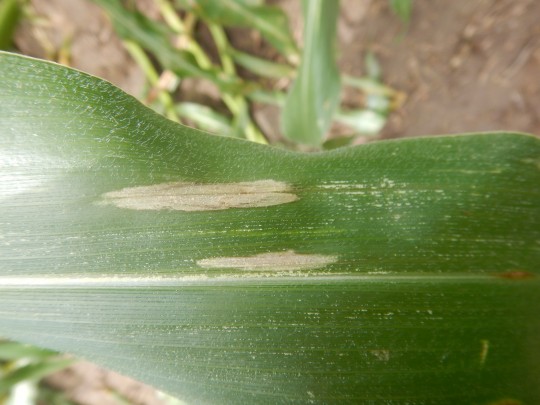
Northern corn leaf blight.
Gray leaf spot.
Tar spot.
Anthracnose.
Certain stalk and ear rots.
The importance of each disease depends on field history, regional conditions, hybrid susceptibility, and the growing season.
Selecting hybrids with appropriate resistance or tolerance ratings is one way to manage disease risk before planting.
However, hybrid resistance does not eliminate the need for field scouting.
Mustang Seeds’ Common Corn Diseases provides additional information about corn disease identification and management. [4]
Insect Protection
Depending on the field, insect risks may include corn rootworm, European corn borer, cutworms, and other pests.
Different insect protection trait packages target different pests.
Growers should confirm which technologies are available in the hybrids they are considering and follow all applicable trait stewardship and refuge requirements.
Standability
Stalk strength and root health are important when growing corn for silage.
Severe lodging can increase harvest difficulty, reduce recoverable forage, and introduce additional soil contamination risk when harvesting downed plants.
Review available standability information alongside yield and forage quality data.
Ear and Stalk Health
Ear and stalk diseases can affect crop quality and harvest management.
Certain ear molds may be associated with mycotoxin risks, although the presence of visible mold does not reliably establish toxin concentration.
When contamination is suspected, appropriate laboratory testing and consultation with a livestock nutritionist or veterinarian are important before feeding.
Ask your Mustang Seeds representative: Which hybrids provide the disease protection, insect traits, and standability characteristics needed for my fields?
4. Timing: Choose Hybrids That Fit Your Silage Harvest Window
Harvest timing has a major influence on corn silage quality.
The goal is to harvest when the whole plant has reached a suitable dry matter concentration for the intended storage system.
Harvesting too wet can increase seepage and undesirable fermentation risks.
Harvesting too dry can make packing difficult, increase trapped oxygen, and contribute to storage losses.
Recommended Corn Silage Harvest Moisture
University of Minnesota Extension provides the following general whole-plant moisture ranges for different storage systems. [5]
Storage system
General target moisture
Bunker silo
65% to 70%
Silage bag
60% to 70%
Upright stave silo
60% to 65%
Upright oxygen-limiting silo
55% to 60%
These are general guidelines. Equipment, storage design, and specific operating conditions may affect the appropriate target.
Don’t Rely on Kernel Milk Line Alone
Kernel development can help growers estimate crop maturity, but it should not be the only factor used to determine silage harvest timing.
Whole-plant moisture testing provides a more direct measurement of whether the crop is ready for the intended storage system.
Sample representative plants from the field and monitor moisture as harvest approaches.
The University of Minnesota Extension emphasizes the importance of measuring actual moisture because plant appearance can be misleading, especially under drought conditions. [5]
Consider Harvest Logistics
For operations harvesting substantial silage acreage, hybrid maturity selection can help spread harvest workload.
Factors to review include:
Total silage acres.
Expected daily chopping capacity.
Labor and equipment availability.
Distance between fields and storage.
Grain harvest commitments.
Weather-related harvest delays.
Available storage capacity.
A mix of appropriately adapted maturities may provide more flexibility than relying on one maturity across all acres.
However, spreading maturities should not come at the expense of local adaptation or forage performance.
Ask your agronomist: Which hybrid maturities will help us reach our desired harvest moisture without overwhelming our chopping and storage capacity?
5. Compare Corn Silage Hybrids Using Yield and Quality Together
The best corn silage hybrid is not necessarily the one with the highest fresh-weight tonnage.
Fresh-weight yield is influenced by moisture content, making it important to compare hybrids on a dry matter basis.
Consider two hypothetical hybrids:
Performance characteristic
Hybrid A
Hybrid B
Dry matter yield
Higher
Moderate
Fiber digestibility
Moderate
Higher
Starch concentration
Higher
Moderate
Relative maturity
Fits local season
Fits local season
Potential fit
Operations prioritizing forage inventory
Operations prioritizing digestible fiber
Illustrative comparison only. These are not Mustang Seeds products or verified trial results.
Neither hybrid is automatically the better choice.
An operation short on forage inventory may place greater emphasis on dry matter yield.
A dairy farm seeking improvements in fiber digestibility may evaluate the nutritional advantages of another hybrid.
The final decision should incorporate the complete ration and the advice of a qualified livestock nutritionist.
Questions to Ask When Reviewing Silage Trial Data
Were hybrids compared at similar whole-plant moisture levels?
Is yield reported as fresh weight or dry matter?
Were starch and NDFD measured using comparable laboratory methods?
Are milk per ton and milk per acre estimates based on the same model?
Were trials conducted in environments relevant to my farm?
Are results available across multiple years or locations?
How did the hybrids compare for disease resistance and standability?
Reviewing these details helps prevent misleading comparisons.
6. Build a Corn Silage Seed Plan Around Your Farm’s Priorities
A practical seed selection process begins with defining what the farm needs from its silage crop.
Corn Silage Hybrid Selection Checklist
Farm priority
What to evaluate
Location
Growing season, relative maturity, soil conditions, local performance
Bunker, bag, upright silo, or other storage requirements
Economics
Seed cost, forage production cost, nutritional value, risk
A useful approach is to rank these priorities before comparing hybrids.
For example, a dairy operation with limited acreage may prioritize nutritional yield per acre.
A farm with ample forage inventory but specific ration goals may emphasize fiber digestibility.
An operation in a short growing season may place greater weight on maturity and harvest reliability.
No single set of priorities applies to every farm.
Mustang Seeds can help growers evaluate available corn genetics and local performance information. Explore Mustang Seeds corn seed options as a starting point. [6]
Frequently Asked Questions About Corn Silage Hybrid Selection
Can a corn hybrid grown for grain also produce good silage?
Yes. Some corn hybrids grown primarily for grain can also perform well for silage.
However, strong grain yield does not automatically guarantee high forage dry matter yield or favorable fiber digestibility.
If a hybrid is being considered for both uses, review available silage-specific trial data rather than relying only on grain yield results.
How can a dairy farm estimate how many corn silage acres it needs?
Start with the amount of corn silage dry matter expected to be fed per animal per day, the number of animals, and the number of feeding days.
Then account for expected storage and feedout losses.
Divide the total dry matter requirement by a realistic dry matter yield per acre.
A livestock nutritionist can help estimate feed requirements, while local yield history provides a useful starting point for acreage planning.
Should drought-stressed corn be harvested earlier for silage?
Not automatically.
Drought stress can change crop development and make visual maturity estimates unreliable.
If kernels are still developing and the plant retains productive green tissue, delaying harvest may allow additional dry matter accumulation.
However, growers should monitor whole-plant moisture and consider crop condition, storage requirements, and the risk of further deterioration.
Drought-stressed corn may also accumulate nitrates, making forage testing important before feeding. [5]
Does a higher corn silage cutting height improve feed quality?
Increasing cutting height can reduce the proportion of lower stalk included in the harvested forage, which may improve certain quality measures.
However, it also leaves more dry matter in the field and reduces harvested tonnage.
The appropriate cutting height depends on forage quality goals, inventory needs, field conditions, and potential contamination concerns.
Evaluate the trade-off between quality and yield rather than assuming a higher cutting height is always beneficial.
How long should corn silage be stored before feeding?
Corn silage undergoes fermentation after harvest, and starch availability can change during storage.
The appropriate feeding timeline depends on silage conditions, fermentation progress, and the farm’s inventory needs.
A livestock nutritionist can help evaluate when newly harvested silage is suitable for inclusion in the ration.
Storage management should also prioritize adequate packing, sealing, and safe feedout practices.
What should growers do if silage test results differ from hybrid trial expectations?
First, confirm that the samples were collected and analyzed appropriately.
Differences can result from growing conditions, harvest maturity, kernel processing, storage, and laboratory methods.
Compare results on the same dry matter basis and use consistent analytical methods when possible.
Review the finished silage analysis with a livestock nutritionist before making ration changes.
Hybrid trial values are useful for selection, but they are not guarantees of the nutritional composition of harvested feed.
Choose Corn Silage Hybrids for the Feed Your Farm Needs
Successful corn silage production begins before planting.
Selecting hybrids that fit the growing environment, forage inventory requirements, nutritional goals, pest pressures, and harvest schedule can help growers build a more reliable feed program.
The best choice is rarely based on one number.
Dry matter yield, starch, fiber digestibility, disease resistance, maturity, and harvest logistics all contribute to the final decision.
Mustang Seeds provides corn seed options and agronomic resources to help growers evaluate hybrids for their fields and management practices.
Planning your next corn silage crop?
Contact Mustang Seeds to discuss your growing conditions, available corn hybrids, local performance information, and silage production priorities.
References and Additional Resources
[1] University of Wisconsin-Madison Extension. MILK2024: Background and Guide.View Source. Explains the MILK2024 model and the evaluation of corn silage nutritional value, milk per ton, and milk per acre.
[2] University of Wisconsin-Madison Extension. Considerations for Selecting Annual Grain Hybrids and Varieties.View Source. Discusses hybrid trial comparisons and corn silage performance measurements.
[3] University of Wisconsin-Madison Extension. Silage-Specific Corn Hybrids for Dairy Cattle Diets.View Source. Examines starch, fiber digestibility, and nutritional considerations for different silage hybrid types.
[4] Mustang Seeds. Common Corn Diseases.View Source. Additional information about corn disease identification and management.
[5] University of Minnesota Extension. Harvesting Drought-Stressed Corn for Silage.View Source. Guidance on whole-plant moisture, storage systems, drought stress, and nitrate concerns.
[6] Mustang Seeds. Corn Seed.View Source. Corn seed information and options for discussing hybrid selection with Mustang Seeds.
[7] University of Wisconsin-Madison Extension. Pricing Corn Silage.View Source. Information about corn silage composition, feed value, and economic considerations.
About Mustang Seeds
Mustang Seeds is an agricultural seed company serving growers with corn, soybean, forage, and other seed solutions. With an emphasis on locally relevant genetics, agronomic knowledge, and grower relationships, Mustang Seeds helps farmers evaluate seed options for their individual operations.
From seed selection and crop management information to local performance data, Mustang Seeds provides resources designed to support informed decisions throughout the growing season.
Explore Mustang Seeds:
Mustang Seeds Homepage: Learn more about Mustang Seeds and its agricultural seed solutions.
Corn Seed: Explore Mustang Seeds corn products and hybrid options.
Soybean Seed: Review soybean seed options and product information.
Agronomy Resources: Find articles and resources covering crop management, scouting, and seed selection.
Local Plot Data: Explore available seed performance and plot information.
Contact Mustang Seeds: Connect with the team for seed selection questions and additional information.
Every acre is different. Find the seed and agronomic support that fits yours.
Farmers need to prioritize corn fields for harvesting by maturity and standability to help avoid yield losses. To evaluate which fields should be harvested first or earlier, farmers should scout for stalk quality issues.
Evaluate stalk integrity
Standability issues are often found in fields that ran short on nutrients or moisture throughout the year. Corn plants remobilize nutrients from their stalk reserves and direct them to the ear for grain fill, causing potential for stalk rot and lowered stalk strength.
The other thing is looking at brace roots. With rapid plant growth, a lot of times we don’t have brace roots that develop, so we’re going to be susceptible to wind. The recommendation is if we’re at that 10% root lodging potential area, those fields have a priority at harvest.
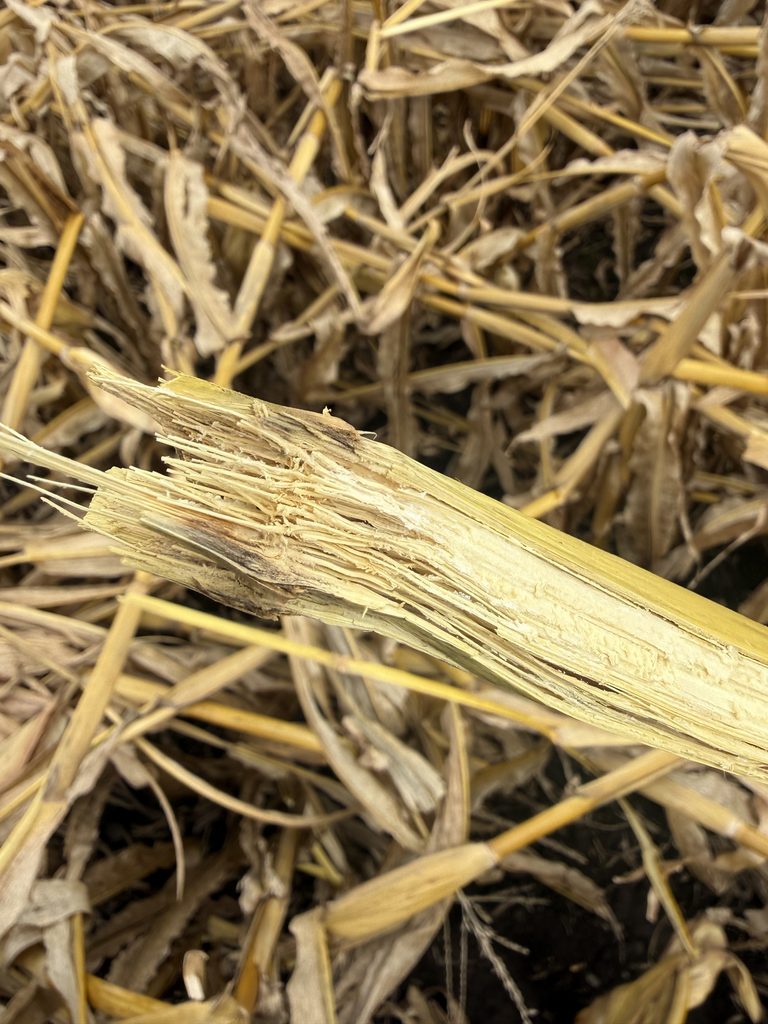
To find that 10%, try the “push and pinch” strength testing on at least 100 random stalks in a field. This involves pushing the upper part of the stalk, so the tassel reaches the adjacent row, then squeezing the lower stalk between nodes about 8-10 inches above the ground.
When stalks snap back, staying erect and rigid, it’s a sign of healthy plants. If stalks break, kink or collapse in about 10% of the plants sampled, that field should be prioritized for harvest.
While macronutrients like nitrogen, phosphorus, and potassium often take center stage. It’s important not to overlook the critical role of micronutrients in achieving top-end corn yields.
Micronutrients Matter
Micronutrients are needed in small amounts, but their impact is anything but minor. These elements, including zinc, manganese, boron, copper, iron, molybdenum, and chlorine, are essential for plant development, disease resistance, and overall productivity.
Each one plays a specific role:
Zinc supports cell division and elongation.
Manganese aids in photosynthesis and chlorophyll production.
Boron is vital for reproductive growth and pollination.
Without proper management, deficiencies can quietly erode your yield potential. For a broader view, explore the importance of micronutrients in corn production.
Soil Testing and Tissue Analysis
Deficiency symptoms often first appear on the youngest leaves or newest plant tissues right when plants are transitioning from seed energy to root function. That’s when testing becomes your best diagnostic tool.
Even if your soil has enough nutrients, they may not be making it into the plant. That’s why plant tissue analysis, in addition to soil testing, is so valuable.
Soil tests give you a pre-season nutrient baseline.
Tissue samples show what the plant is actually absorbing.
Compare the two to uncover uptake issues vs. true deficiencies and refine your in-season management strategy.
Managing Soil pH and Drainage for Micronutrient Uptake
Soil pH directly influences micronutrient availability. For corn, aim for a soil pH between 6.5 and 6.8.
If your pH is too low, especially in more acidic soils, deficiencies can become more common. Lime applications can help correct that and on the other hand, many Midwestern fields have high pH due to poor drainage and excess salts. In those cases, tile drainage may help improve root zone conditions.
Oxygen levels are just as important. Poorly drained soils from a wet spring can lead to surface crusting and waterlogged root zones conditions that limit nutrient uptake. Addressing drainage and compaction issues early can prevent stunted stands and uneven emergence.
Application Strategies for Micronutrients
How you apply micronutrients depends on your soil conditions, crop stage, and management goals. Options include:
Soil-applied products (pre-plant or at planting)
Foliar sprays during vegetative stages
Fertigation if irrigation is available
Foliar applications can act as a rescue treatment during rapid vegetative growth or when tissue tests show acute deficiencies. However, they should complement, not replace, a well-rounded fertility program.
Balancing micronutrients is a key part of getting the most out of your corn crop. Regular testing, timely applications, and soil condition management can help you maximize plant health and yield potential.
It’s easy to assume a corn hybrid and/or disease is to blame for a poor performance, but it’s often more complicated than that. It’s important to go a little deeper and investigate whether nutrient deficiencies or imbalances factored into any shortfalls in your fields.
Key points
By the time you see nutrient deficiencies, you’ve likely already lost yield.
N, P & K are important, but so are micronutrients like zinc or boron.
In some cases, the issue is with uptake rather than nutrient levels.
Corn crossed the finish line on fumes
Corn plants will identify nutrient deficiencies in various ways, whether it’s striping or yellowing or stunting or something else. By the time you see nutrient deficiency symptoms, yield is likely already affected.
You might be able to correct and prevent additional yield damage, but you could have saved more if you had seen it coming. Tissue sampling and in-season soil testing can give farmers more of a heads-up.
Many pieces to the yield puzzle
Farmers often focus on nitrogen, phosphorus and potassium, but those aren’t the only nutrients farmers should pay attention to. Other micronutrients worthy of attention include boron, zinc, sulfur and manganese.
Boron is important for root development. Zinc helps the plant early in the season with germination and growth. Manganese is important from a disease standpoint. Sulfur is necessary for nitrogen fixation and plant function.
They’re all pieces of the puzzle. If you’re missing one, the corn plant is unlikely to see a dramatic yield impact, but it also won’t perform as best it can. The biggest nutrient-related hits to yield typically come when a deficiency leaves a corn plant vulnerable to a disease like tar spot.
Other issues that can limit nutrient uptake
Application timing is a major factor, since the crop uses nutrients at different points during the growing cycle. For instance, a corn plant needs boron when the ear is forming within the plant and after pollination when ears are elongating. Split applications can help make farmers more efficient with their use of boron.
Soil pH is another consideration. You can apply all the nutrients you want, but if your soil pH isn’t balanced, your corn won’t be able to take advantage of available nutrients. This is especially true with sandy soils that tend to be more acidic. Corn responds best when soil pH is around 6.8.
Soil compaction can also limit nutrient uptake. If the root system can’t penetrate the soil profile, the corn plant won’t be able to access the nutrients that are there. Breaking up areas of hardpan might involve de-tillage or cover crops, depending on the farm operation.
Injury to a plant’s root system — whether that’s via root feeding, disease, nematodes or fertilizer burn — can also compromise nutrient uptake. Farmers should also keep moisture levels in mind when assessing crops’ nutrient needs. Too much moisture can move nutrients below the root zone, while too little can limit the plant’s ability to take nutrients up.
High-quality corn silage is the cornerstone of herd performance, feed efficiency, and profitability. But it can’t be captured by a single lab metric. Silage quality results from hybrid selection, in-season management, harvest execution, and proper storage, all tuned to your farm’s environment and feeding goals. At Mustang Seeds, our RationChoice lineup is tested locally and regionally to deliver the consistency livestock operations depend on, tonnage, starch, and fiber digestibility that translate to real performance in the bunk and the barn.
Hybrid Selection: The Starting Point of Silage Quality
Silage quality begins with choosing the right hybrid. Genetics provide the base; management preserves the value.
Mustang Seeds offers silage products across a range of maturities (80–120 RM), helping growers match products to growing conditions, harvest timing, and feed strategies. Many products also offer dual-purpose flexibility, delivering strong results whether harvested as silage or grain.
Selecting the right hybrid sets up everything that follows.
In-Season Management: Setting Up Quality Before Harvest
Silage potential is shaped long before the chopper enters the field. Growing-season conditions and management influence fiber quality, starch accumulation, and plant health.
Influencing factors include:
Seasonal rainfall and temperature, which affect lignin formation and starch accumulation.
Disease pressure, which can trigger premature plant shutdown and create uneven moisture.
Fertility and population management, which impact plant size, fiber composition, and tonnage.
Healthy plants support better fiber integrity, more consistent kernel fill, and improved digestibility.
“Starch levels and starch digestibility are equally important drivers of high-quality silage.” — Mustang Seeds Agronomist
Harvest: Where Digestibility and Feed Value Are Finalized
Kernel Processing & Particle Size
Kernel processing and particle size directly influence starch digestibility and feed efficiency.
Kernel processing score reflects how well kernels are cracked for rumen access and strongly correlates with milk yield and feed conversion.
Particle size distribution impacts rumen function—too coarse limits intake, too fine hinders rumen health.
Proper harvester settings, processor clearance, and chop length determine how efficiently feed can be digested.
Even small adjustments at harvest can make a measurable difference in performance.
Harvest Moisture
Harvesting at 65–70% whole-plant moisture supports optimal fermentation and storage stability.
Storage & Feedout: Preserving the Value You Built
Proper storage protects dry matter, minimizes spoilage, and maintains digestibility.
Key priorities:
Packing and sealing quickly to exclude oxygen
Monitoring stability throughout storage
Managing face removal to limit losses
High-quality silage is the product of managing each step from hybrid to feedout, not any single action.
RationChoice: Reliable Nutrition, Season After Season
Mustang Seeds products are validated through agronomic and nutritional testing for consistent feed quality across environments.
Mustang Seeds RationChoice includes:
Fiber digestibility supported by low lignin (2–5%)
Strong starch content (~40%)
Reliable standability for flexible harvest
Testing across 70+ research and commercial plots
Whether your goal is high tonnage, improved digestibility, or dual-purpose flexibility, RationChoice hybrids deliver dependable results from seed to feed.
Ready to Strengthen Your Silage Plan?
Building a high-quality silage system starts with the right hybrid. Explore the Mustang Seeds corn silage hybrid lineup and connect with your Mustang Seeds agronomist to develop a hybrid and management plan that supports your herd’s nutrition and your farm’s bottom line.
Glossary: Key Forage Quality Terms
NDF (Neutral Detergent Fiber): Total fiber content (cellulose, hemicellulose, lignin); higher NDF means lower intake.
ADF (Acid Detergent Fiber): Less digestible fiber (cellulose + lignin); lower ADF = more energy.
The 2026 season featured high yield potential but also disease pressure for some areas of the Upper Midwest.
Therefore, higher levels of management really paid off.
The season reminds of the importance of diverse seed choices and frequent scouting.
Season-long management really paid off for a number of Upper Midwest growers in 2026. It was one of the main differentiators between fields that finished strong and those that gave up bushels heading into harvest, according to Louis Kuisle, field agronomist for Mustang Seeds.
“That extra level of management was critical to realizing that top-end yield potential,” says Kuisle. Crops in his southeast Minnesota territory showed solid yield potential thanks to good heat units and generally favorable weather, but they also faced significant disease pressure.
“Growers who opted for some of those extras from a management perspective, whether that was a more targeted fertilizer program, split applying nitrogen and other nutrients, running micronutrient packs and/or applying fungicide were really rewarded this season,” Kuisle says.
Corn rootworm numbers were flat to down a bit for Kuisle’s area, which reflected a cooler spring as well as improved pest management.
Other challenges for corn included some stalk quality issues stemming from the combination of disease and some late-season rain and wind. Tall plants and some higher planting populations also led to some lodging in soybeans, Kuisle adds.
Making the most of every dollar
Growers were especially focused on stretching every dollar this season, and the yield potential they saw in fields paired with conducive weather for disease helped justify additional applications. Fungicide applications, spoon feeding crops nutrients and frequent crop scouting made a big difference in how crops finished.
That’s not the case every season. For instance, you can’t manage your way out of a drought or flood. But this year, hands-on management really delivered, Kuisle says.
When making these crop management decisions, growers weigh cost and effectiveness, with potential return on investment always top of mind.
Effectiveness can be challenging to measure because there are so many variables that come into play. “Timing, application, soil types, management — they all play a factor,” Kuisle says.
One of the best things a grower can do to gauge that is to do trials on their farm to see if the product works well on their ground and under their management system.
Scout crops for better management
Farm management goes hand-in-hand with scouting fields and monitoring the spread of crop disease.
“Most fungicides are preventative products, not curative,” Kuisle says. The best results come when they’re applied just before or right as a disease shows up. If a disease is established in a field, bushels have likely already been lost.
Walking fields can alert growers to threats so they can make timely applications. On the other hand, scouting can also clue growers in that a threat may be waning as weather shifts or a disease backs off, helping them be more strategic when resources are thin.
Spread risk exposure with strategic seed choices
Because growers never know what sort of environment is headed their way, it’s really important to be strategic with their corn and soybean seed choices.
“Picking the right products is the most important part of your farming operation,” Kuisle says. “You can do everything right, but if you select the wrong seed products for your operation, you’ll end up with poor results.”
Each hybrid or variety has its own unique strengths, and no single seed product can beat every crop disease, Kuisle explains. “That’s why you don’t want to put all your money on one horse. Plant a mix of corn and soybean products with different backgrounds.”
Kuisle also warns against going all-in and planting every acre to the “latest and greatest” hybrid or variety. Again, he advises using a mix of both new products and trusted standbys to spread risk.
Weed management in soybeans remains a hurdle
Looking ahead, one area that could be improved is weed control in soybeans, according to Kuisle. “We’re getting more and more flushes of waterhemp and it’s going to be an ongoing challenge,” he says, noting it doesn’t seem to matter what the conditions are — the noxious weed shows up.
He encourages growers to make sure they’re using a mix of products and modes of action to control weeds in soybeans and to be sure to consider new trait pipelines making their way to market.
Kuisle encourages growers to look back at what worked this season — from scouting notes and disease pressure to on-farm trial results — and use that information to guide next year’s seed and management decisions.
To start building a plan for 2027, reach out to your local Mustang Seeds agronomist.
Test plots can be a useful seed selection tool when results are viewed as part of a grouping.
Make sure your seed choices include a variety of genetics to spread your risk.
When considering seed from a test plot, ask questions about plot conditions and broader product performance.
A hybrid in a nearby test plot caught your eye. It took the season’s challenges in stride and finished with strong yields. Should you consider it for your next seed order?
Absolutely. But before you add it to your list, you need more information.
Think of test plots as a tool that can help provide part of the answer rather than a definitive solution, says Mustang Seeds Field Agronomist Brian Ternus. He shares some of the best ways to use crop plot data to make more informed seed decisions.
Don’t put too much faith into individual test plot results
Farm test plots aren’t research plots with lots of replications and checks. There’s variation from field to field and from farmer to farmer, and that can impact performance.
“Any product can do great in one plot if it happens to be well adapted to that particular field or season,” Ternus says. Different seasons bring different winners.
Getting a handle on whether that prowess reflects the situation or consistency requires a data set that goes beyond a single field.
“The real value comes from looking at test plot results as a whole grouping,” says Ternus, adding “there’s power in the numbers.” Together, they can start to give you a good idea of which hybrids will float to the top.
“Seeking consistent performance across plots gets you those hybrids or varieties that can handle the range of conditions we face in the Upper Midwest,” Ternus says. “If you’re strictly looking at the high yielder from one plot, you might find it thrived in current conditions but was unable to handle a shift in weather the next season.”
Certainly, there might be times when you’re seeking a top performer for productive acres or know you need to cut some inputs and need seed with higher stress tolerance. But it’s generally best to look for performance consistency across fields and years (if applicable).
For Ternus, that means choosing corn and soybean seed with yields that regularly rank in the top quarter across several farming plots.
Spread risk by planting a variety of seed
Ternus encourages farmers to plant several hybrids or varieties across their acres, which diversifies genetics and better spreads risk.
“You never know what you’re going to get for weather or disease pressures, and your seed choices need to account for that,” Ternus says. Planting a diverse mix of corn and soybean products can help farmers prepare for those unknowns.
This was a dry season for eastern South Dakota and southwest Minnesota. “Corn and soybean seed that handle drought stress well floated to the top,” Ternus says. “Last year, we had high disease pressure so seed with higher disease tolerances or with higher responses to fungicide applications tended to do best.”
As a result, Ternus says 52G02 is looking great in this year’s test plots, but the season prior it was limited by southern rust. In 2025, 58M01 handled disease pressures well and stood out in harvest test plots.
Ask questions
If you’re interested in seed from a field trial, Ternus recommends asking questions to gain a deeper understanding of the plot and the performance of the seed planted to it. Those might include:
What’s the soil type of the farm test plot?
How did the growing season play out for this field? (E.g., did it catch rains others missed?)
Was fungicide applied?
What planting rotation is used in the field?
Were any additional traits used?
Next up, Ternus advises questioning an agronomist, seed dealer or DSM who has likely seen the product elsewhere. Questions like these can help:
Was there a specific thing in the plot that helped the product perform well?
Is this product showing well across the area?
How does it perform under conditions different from what we saw this season?
If the product is a year or two old, find out how it performed in actual growers’ fields. Sometimes, differences in shading in field test plot environments can impact performance.
Deepen product understanding to improve management
A test plot’s value doesn’t end with product selection. They also help agronomists and the growers they serve get a better handle on their characteristics and how to optimize management.
“If you know a hybrid is more susceptible to stalk rot, you can manage for it and harvest it a bit earlier,” Ternus offers as an example. The better growers know their seed, the more prepared they are to optimize their crops’ yields.
For Ternus, these farm plots help him offer better recommendations for meeting customers’ goals and they equip him with perspective on how they handle other regions or environments. In short, it makes him a stronger partner for the growers he serves.
The central and western Corn Belt is dealing with drought conditions, while the east and southern Corn Belt has had torrential downpours, strong winds and hail. But how much water can corn and soybeans handle before drowning? Like most everything in farming – it depends.
Assessing Corn Flooding
The further along the corn crop is, the better chance it has to survive flooding. Fully submerged corn at the V6 stage can survive about two days under hot conditions and up to four days with cooler, cloudy conditions. However, the speed the water evaporates or runs off at is key. If you see new growth three to five days after the water has retreated, odds are your corn will live – but not without some damage.
Root development is weakened in saturated soils, which can lead to more problems later in the year. Diseases like crazy top and crown rot could be more of a problem in these areas, in addition to nitrogen loss due to leaching. If the flooded area is large, additional nitrogen will help your yield potential.
Assessing Soybean Flooding
Soybeans are subject to the same issues as corn, where duration of water and temperatures are key in the time they can survive. However, soybeans can survive longer than corn in flooded conditions. Generally speaking, beans will survive four to six days submerged in hot, sunny conditions, and seven to ten days in cool and cloudy conditions.
When you’re assessing soybeans after flooding, look for new growth from the top of the plant a few days after the water is gone. Unless you get another shower right away, it will be easy to see the nice green growth popping up from the dried, mud-covered beans. Similar to corn, disease pressure becomes an issue in flooded soybeans. Be on the lookout for water-loving pathogens like Pythium and Phytophthora Root Rot.
As I am writing this article, we are on the front end of a major cold front that is going to sweep across most of the corn belt. It is expected to bring with it colder than average temperature’s with rain and snow to the west and north. Planting operations are in full GO MODE in most of the storm track path. I have received numerous calls over the last day or so from growers questioning whether they should continue to plant or hold off until the front passes.
The biggest concern is a drop of soil temps in the top two inches. Cold imbibition, cold chill imbibition, or cold shock are all terms used to describe the same affects caused to seedlings. Soil temperatures regulate whether seeds will germinate or not. The ground temperature needs to be 50 degrees Fahrenheit for a corn seed to start the germination process. During the first 24 to 48 hours the seedling imbibes, or absorbs, water and swells. During this process if the soil temps drop below 50 degrees Fahrenheit for an extended period, or if the seedling simply absorbs cold water, it can cause major issues. The absorption of cold water causes cell membranes to rupture in seedlings and can alter germination, vigor, and emergence. All of this in turn can lead to reduction is stand establishment.
Symptoms of cold shock can vary. Most of the time the symptoms are corkscrewed or twisted sprouts. Often the sprouts are an off-color of white or yellow. In some cases, you even when you see the symptoms above, the plant will emerge. But the damage is often already done, and the plant simply lacks energy to compete and becomes essentially a weed. Below are some pictures often associated with cold imbibition or cold shock.
Growers should monitor current soil temps and expected weather over the next few days. If current soil temps are border line for germination currently, or if they are forecast for cold precipitation then holding off planting is probably a wise choice.
Sometimes, it’s the little things that make all the difference.
Baking soda in chocolate chip cookies. Nutmeg in apple crisp. That splash of vanilla in Aunt Gertrude’s famous pecan pie.
These “minor” ingredients may not be the stars of the show. But without them, it’s doubtful these desserts would earn a blue ribbon at the county fair.
The same notion rings true with essential nutrients for your corn and soybeans. Macronutrients—nitrogen, phosphorus, potassium, calcium, magnesium and sulfur—may get all the glory, but micronutrients play a vital role in crop growth and development.
In fact, they may be the secret ingredients to ensure your grain bins are busting after the harvest.
What are the eight micronutrients, and why are they important?
Copper (Cu):
Copper is essential to chlorophyll and seed production. When your fields are deficient, you can count on a lower yield. Furthermore, copper deficiency can lead to disease susceptibility… and that’s not good for your harvest check.
Iron (Fe):
Soils are often rich in iron, but iron availability can vary and often decreases in soils with a high pH. In soybeans, iron is essential for nodule formation and thus nitrogen fixation—which is pretty important.
Manganese (Mn):
Manganese is important for nitrogen metabolism and root growth, and a deficiency can lead to big yield losses. It’s important to correctly identify manganese deficiency in soybeans because it often looks similar to a lack of iron. Here’s the good news: soybeans usually show a significant response when fertilized with manganese.
Zinc (Zn):
It may seem insignificant, but here are the facts: corn needs zinc. And more than other micronutrients, a zinc deficiency may really hold back your corn’s performance. A zinc deficiency can cause stunted growth, poor root development, and delayed tasseling and silking. All of that leads to one thing—lower yields. If you’re growing corn, be sure your soil is rich in zinc and that it’s available.
Boron (B):
Corn and soybeans don’t need much boron, but without it, you can kiss your harvest check goodbye. Boron deficiency in corn results in short cobs and barren ears. In soybeans, plants have stunted roots, and flowering basically stops. But just a smidge too much boron can lead to toxicity, so it’s important to get the balance right.
Chloride (Cl):
Chloride is essential for cell hydration and maintaining turgor pressure, which keeps plants standing up straight. Because it is an anion (negatively charged), it also functions as an important transport molecule for other essential nutrients.
Nickel (Ni):
A relative latecomer to the list of essential plant nutrients, nickel is undoubtedly vital. Deficiency can reduce leaf tissue expansion. In soybeans, nickel can help with nitrogen metabolism and nodule formation.
Molybdenum (Mo):
When you think about molybdenum, you’d better think about nitrogen (and all the corn farmers’ ears perk up). Molybdenum plays an important role in an enzyme reaction that converts nitrate into ammonium in the plant. No Mo = little nitrogen (and little corn yields).
Big-ticket macronutrients consume most of our soil fertility brain space, but be sure to leave a little room for the smaller ones. Soil tests and, if necessary, tissue tests, are vital tools to implement to take stock of micronutrients in your fields. Reach out to your Mustang Seeds agronomist, so your reliable partner can help you identify the micronutrient needs on your farm.
In the magical world of soybeans, most people have a basic knowledge of when the flowering starts. As soon as the days get longer, the beans start to flower. Right? But hold the phone, there’s more to it than that. Read on to find out what actually goes on and maybe how it can help explain why planting date is so important and maturities really matter.
Soybeans can begin flowering about a week before the summer solstice, but generally just after. This means that soybeans are photo period sensitive. They begin the reproductive stage when the nights become longer. They will put on viable flowers for about 50-60 days after. Early planted soybeans can actually start about a week before the solstice and carry through for about two months putting on flowers, that lead to pods, that lead to beans, that pays the bills. What does an extra few pods mean to yield? Studies by Fred Below at the University of Illinois showed every extra pod you get, leads to 2 extra bushels1.
Temperature is also key to driving flowering. Soybeans grow both reproductively and vegetatively through the summer. The warmer the temps, the more vegetative growth it gets, more nodes on the plant, that’s where the flowers happen. In late planted areas, more vegetation is key. Whether that’s in the form of slightly longer maturities or higher populations, wave your magic wand and try to get the most biomass out there.
What happens to the plant when planting is delayed?“Although soybeans respond to day length (photoperiod), flowering will be delayed past solstice when the crop is planted late. However, because it’s warmer, flowering will be faster which will compensate for the late start.”2
I wanted to look into that and found a research article from Iowa State University. In this test they did a five-year study using early soybeans (Group 2.2-2.7) and fuller season maturities (Group 2.5-3.9). They found that even though beans are planted late, the beans actually speed up the vegetative growth and mature at a similar time with earlier planted beans “In recent trials conducted at seven research farms over five years, the same soybean variety planted 40 to 60 days apart reached physiological maturity within 7-10 days of each other. Moreover, a 0.5 to 1.0 maturity group spread resulted in a difference of only 3-5 days to reach maturity.”3
Now did yield get affected? Of course, but changing maturities didn’t really make a difference in harvest date. But, we have to go with what mother nature deals out at the time of planting, Alakazaam! Good luck, be safe, and Happy Trails.
Planting season is over and crops are emerging. It’s time to scout your fields.
A good scouting technique begins with knowing how to stage your crop and choosing a method that works best for your farm. There are two methods used to stage corn plants: leaf collar and “droopy” leaf
Leaf collar method– counts the number of leaves on a plant that have visible collars, starting with the rounded “thumb-shaped” leaf near the bottom of the plant and excludes leaves still in the whorl.
“Droopy” leaf method– begins with the rounded leaf of the plant but counts leaves in the whorl that are 50% exposed or “droopy” as the next vegetative stage.
Most older herbicides use the “droopy” leaf method when determining the stages that you can do an application- while newer labels use the leaf collar method. Keep in mind the method of staging you’re using and double check herbicide labels before application to your field. Applying herbicides too early (or too late) risks damage to your crop.
Scouting the stages
VE to V3
During the V2 to V3 stages, the plant switches from relying on the seed, to relying on and living off the root system. Nodal roots and root hairs are forming, providing structure and nutrients to the plant.
What to scout for:
Emergence: How does your stand look? Is replant necessary?
Nutrient deficiencies: Purpling, yellowing or striping
Insects: Black Cutworm, White Grub, Seed Corn Beetles, Wireworms
Seedling diseases: Pythium, Rhizoctonia, Fusarium and Phytophthora
Weeds
V4 to V6
The growing point of a corn plant is below the surface until late V5 to V6. At this stage, any severe problem (such as frost damage or complete cut off of the plant) will result in little to no damage, meaning the plant can recover and still have a successful season. However, when the growing point is above ground, any serious damage will result in plant death.
What to scout for:
Growth stages: Vegetative stages in which herbicides can be used
Weeds: Note height and relative cover of plants for herbicide applications
V7 to VT is a long period that is crucial to corn development. Root development is continued, and maximum row (ear length) and kernel numbers (ear width) are finalized. Ear development begins rapid growth as it reaches V16 to V18, making the plant sensitive to hot, dry conditions.
All tassels are visible on the plant. Silk emergence will begin in two to three days, putting the plant in reproductive stages. Disease and insect damage is critical to scout for at VT through the reproductive stages, because loss of leaves and damage to silks at this point in the season will result in yield loss.
There are a lot of decisions that revolve around nutrient management and what type of fertilizers that should be applied considering commodity prices. There are 17 nutrient elements needed in order for a corn plant to complete its life cycle. There are macronutrients which are used in larger quantities and micronutrients which are needed in smaller amounts. When referring to liquid fertilizer applications a lot of retailers/growers say “10-34-0” or “8-20-5”. This is indicating the percentages of Nitrogen-Phosphorus-Potassium (N-P-K) in the liquid blend. Other nutrients such as Sulfur and Zinc can be added, which could be a blend of 8-20-5-5-.5 (N-P-K-S-Zn) sometimes referred to as “triple nickel.” They are referred to in this manner because N, P, and K, are macronutrients that are called the primary elements. These nutrients are usually the focus for growers during their spring and summer fertilizer applications because they usually have the biggest impact on yields.
Let’s start with Potassium (K): It is derived from weathered soil minerals such as clay. Typically, the higher K levels will be in fields with higher clay content, and in contrast the deficient K levels tend to be found in more sandy fields. Most soils contain large quantities of K, but it is usually not all available. K is an essential plant nutrient identified with overall plant vigor. Potassium helps plants activate enzymes, draw water into roots (helping with N uptake), produce phosphate molecules and CO2, and translocate sugars. It also is responsible for the opening and closing of the leaf stomata. The stomates serve as entryways for water and other elements in the leaf (i.e. transpiration). Because of these responsibilities, it has been theorized that adequate levels of K provide a higher level of drought tolerance and disease resistance versus deficient fields.
Recommended soil test levels: Soil test recommendations differ regionally but optimum soil test levels would be above 250ppm. Deficient soil test levels would be less than 150ppm. Deficiency characteristics: Lower leaves are affected first. The plant has a slower rate of growth and the leaf edges and tips become dry and scorched with yellowing stripes. Plant lodging becomes a concern as the corn plant matures. Crop Removal: There is approximately .27 lbs. of K removed per bushel of grain. So, crop removal (from grain) would be 54 pounds of K20 on 200 bu/ac of corn.
Next is Phosphorus (P): P is involved in energy transfer via adenosine triphosphate (ATP); and is a part of ribonucleic acid (RNA), and deoxyribonucleic acid (DNA). In more simplistic terms, P plays a major role in storing and transferring of energy for new cell growth. It is found throughout the plant, concentrating in leaves where photosynthesis takes place, and at growing points where energy for new growth is needed. P has been linked to good root establishment and overall plant structure. P is not as naturally abundant in the soil as other macronutrients and is relatively immobile because of its negative charge that binds to positively charged particles, such as calcium. Therefore, soil erosion is usually the only way P can move off the field of application.
Recommended soil test levels: Again, soil test recommendations differ regionally but optimum soil test levels would be above 30 ppm (testing method being a Mehlich P-3 or Bray P-1). Deficient soil test levels would be less than 18 ppm. Deficiency characteristics: Slow growing, stunted plants with an inferior root system. The lower leaves tend to become a reddish-purple color. The reddish color indicates an energy buildup that doesn’t have the ability to relocate. Plant standability and grain fill can also be compromised. Crop removal: There is approximately .38 lbs. of P removed per bushel of grain. So, crop removal (from grain) would be 76 pounds of P205 on 200 bu/ac of corn.
Last, but certainly not least is Nitrogen (N): N can be taken up by the plant in two forms, nitrate (NO3-) and ammonium (NH4+). In order to get (NO3-) and (NH4+) there must be a biological transformation from organic N. Since the transformation is biological, N is sensitive to soil pH, temperature and moisture. Moisture for example, would be saturated soils that would result in nitrates being lost in the form of leaching or denitrification. Nitrogen is a key ingredient in amino acids and the creation of proteins, which are both essential for cell growth. Amino acids and proteins are the building blocks for essentially everything in the plant; therefore, N is correlated to overall gains in dry matter. Since N is involved at every developmental stage of a corn plant, it has the greatest impact on yield among nutrients.
Recommended soil test levels: Soil test levels are really only relevant as credit to the current year’s application. Today’s yield demand is usually too high to be processed naturally in most cases, so supplemental N is added for each growing season. Crop removal: Nitrogen recommendations range from 1 lbs.-1.2 lbs.# of N per bushel of corn, so on a 200-bushel yield goal you would need approximately 240# of N. Crop removal is less than the recommendation, but this allows for some N loss during the growing season. Residual soil nitrates (topsoil and subsoil), legume credits (i.e. soybeans), irrigation water credit, and pre-applied fertilizer/manure can all be used as credits when calculating total N needed for the desired yield goal. Deficiency characteristics: Interruption in the growth process that causes stunting due to poor cell development and yellowing due to decreased chlorophyll formation. Yellowing occurs on older leaves first then moves to newer leaves. The yellowing occurs at the mid-rib near the tip of the leaf moving inward with a distinct v-shaped pattern. High amounts of N can stimulate more vegetation but could lead to an under developing root system compared to the above ground growth. Lodging and/or greensnap issues could develop given the timing of application and wind events.
All three nutrients play an intricate role in the development of a plant and its ability to achieve its highest yield potential. In a price market like the one we are currently in, it is important to be more efficient with inputs and not just cut them out. N-P-K are the nutrients that are removed from the soil in the largest amounts at harvest. Nitrogen is often looked at as the major need, but phosphorus and potassium play import roles as well and each one influences the efficiency of the other. Soil samples should be taken to help identify ways to be more efficient with nutrient management. Identifying and addressing not only deficient areas but also what adjustments need to be made in application, timing, and rates in order to better accommodate weather patterns and achieve the best return on investment.
Spot the Threats Early. Act to Protect Your Yield.
As we move through August, corn crops across the Corn Belt are approaching peak development. This is the prime time for evaluating hybrid performance and projecting yield potential. But it’s also when disease pressure ramps up. With timely rains and elevated humidity across much of the Midwest, it’s critical to scout early and often to protect what you’ve worked for all season.
Corn diseases have become more aggressive over the last decade, driven by tighter rotations, reduced tillage, and shifting weather patterns. Effective management means combining field awareness, hybrid selection, and timely fungicide decisions. Below, we outline the major corn diseases to watch for, conditions that drive infection, and how to respond.
Key Corn Diseases and Symptoms
Grey Leaf Spot
Caused by Cercospora zeae-maydis, Grey Leaf Spot is one of the most widespread and yield-impacting corn diseases in the Midwest. It’s favored by hot, humid weather and typically begins on lower leaves as pinpoint lesions. As it progresses, lesions become rectangular and stay between the veins. Continuous corn and no-till fields are at highest risk due to residue-borne spores. (Photo Courtesy of University of Illinois).
Northern Corn Leaf Blight
Northern Corn Leaf Blight is caused by the fungus Exserohilum turcicum and unlike Grey Leaf Spot, NCLB favors more moderate temperatures for disease to progress. The disease lesions are also long and oval and resemble a “cigar shape” and can be anywhere from 1-7” in length. The size of lesions a lot of times corresponds with hybrid susceptibility. This disease like Grey Leaf Spot can overwinter in corn residue so disease usually starts at lower leaves and works its way up the plant. Heavy dews and prolonged leaf wetness can cause more severity. When deciding on foliar treatment look at hybrid ratings and infected leaf area for treatment. Residue management in the future can also help prevent the disease in future years (Photo Courtesy of University of Nebraska-Lincoln).
Southern Rust
Southern Rust in Corn is caused by the fungus Puccinia polysosra and has quickly became a disease to pay close attention to. The disease finds its way to the southern states and central corn belt from tropical storms that bring the spores from the south to settle on corn plants across the area. The good thing about Southern Rust is that it requires a living host to survive so it does not overwinter. Southern Rust is usually seen as a bigger threat to yield as opposed to common rust, so it is important to distinguish the two apart. Common Rust is seen on both the upper and lower leaf surfaces and is usually scattered across the plant. Southern Rust is usually located only on the upper leaf surface and is orange and dingy in color and packed closely together. It is important to scout and monitor this disease because the earlier the infection, the greater the yield loss. Fungicides can help in controlling the spread and yield loss but hybrid selection is also key in disease management. Southern States and areas with a history of southern rust should avoid hybrids with low ratings.
Goss’ Wilt
Goss’s Wilt is actually a bacteria rather than a fungus. It is caused by the bacterium Clavibacter michiganensis subsp. Nebraskensis. It was first found in the state of Nebraska and since has found its way in other states in the Midwest and can cause substantial yield loss. It is identified predominantly as a leaf blight and has a “water soaked” appearance with “black freckles” that cannot rub off. Early mornings or after a rain sometimes you can see bacterial ooze or when dry shows a shiny appearance. Infected plants show symptoms of droughty conditions and premature death of the plant. Conditions that favor the bacterial disease are hail damage or high winds that create entry points for the disease and wind driven rain can spread the bacteria. The disease can also overwinter in residue. Due to being a bacterium, fungicides cannot slow or prevent the disease. Our best line of attack is hybrid resistance so in areas with a history of goss’s wilt, strong scores against goss’s wilt should be a priority (Photos courtesy of Iowa State University).
Tar Spot
Tar Spot is a relatively new disease to the United States first confirmed in 2015. It is caused by the fungus Phyllachora maydis. When it was first discovered it was seen late in the growing season and very little yield impact was observed. In 2018 a yield reduction was observed across multiple states and since then more pathologists and universities began studying the disease closer to learn about management practices and control. It is identified as round raised black lesions scattered across the leaf surface on both live and dead tissue. There is still a lot to learn about this disease, but one observation that we seem to find is hybrids with overall healthy leaf disease scores tend to tolerate the disease more than hybrids with more average scores. We will hopefully have a better understanding of this disease and what to do in the future.
Disease Pressure Drivers
Understanding why disease develops is as important as knowing what it looks like. Common drivers include:
Weather conditions: Extended leaf wetness and humidity accelerate disease spread.
Crop rotation: Continuous corn increases inoculum and disease carryover.
Hybrid susceptibility: Varieties with lower resistance can escalate outbreaks.
Residue levels: No-till fields provide a home for overwintering pathogens.
High-risk fields often benefit from earlier fungicide timing and increased scouting.
Scouting and Identification
Timely scouting is your first line of defense. Here’s how to do it right:
Timing: Start at V5–V10 for early symptoms; scout again from VT through R3 to assess spread and treatment thresholds.
Patterns: Walk fields in a W or zig-zag to catch variability.
Documentation: Record lesion type, position on the plant, and canopy coverage.
Diagnostics: Use tissue testing if nutrient stress is suspected; track weather to predict outbreaks.
Early detection, especially in susceptible hybrids, can dramatically reduce yield loss.
Fungicide Timing and Selection
Fungicides aren’t always necessary, but when they are, timing and selection matter.
Application windows:
V5–V7: Early protection for fields with heavy residue or history of disease.
VT–R1: Broad-spectrum protection at a key yield stage.
Selection tips:
Use multiple modes of action to reduce resistance risk.
Match products to target diseases (tar spot, GLS, rust).
Evaluate ROI based on pressure, hybrid ratings, and weather outlook.
Post-application scouting is key to verifying control.
Hybrid Selection and Integrated Management
Preventing disease begins with smart product placement and cultural practices.
Select Mustang Seeds hybrids with strong disease scores suited to your geography.
Use rotation and tillage to break disease cycles in continuous corn.
Plant early to avoid peak infection windows.
Leverage scouting insights to refine hybrid and management decisions next season.
A proactive approach protects yield not just this year, but in the years ahead.
Stay Ahead of Disease Before It Costs You
Corn diseases can spread fast and take down yield even faster. But with the right combination of scouting, hybrid choice, and fungicide strategy, you can manage pressure and stay in control.
In corn, the ear is meant to stay sitting upright on the plant until the crop reaches physiological maturity, also known as black layer. Then, once the plant has hit black layer, the ear shank will start to deteriorate and the ear will droop and dry down to harvest moisture. However, during late season scouting this year, we found many cases where the ears drooped before the crop reached physiological maturity.
Causes of Early Ear Drop
High temperatures, drought stress, genetics, and plant populations can all contribute to early ear drop. Most instances of this were found during the dent stage and can be attributed to very dry conditions since the beginning of August, combined with warm temperatures, which caused the crop to mature very quickly. Early ear drop hit the hardest in the last week of August during a hot week (relative to the time of year) with temps in the mid 90’s for five to seven days. The intense heat, along with present drought stress in many fields, appears to be the cause of the early ear drop.
Side Effects of Early Ear Drop
Early ear drooping kinks the ear shank and can completely stop the grain fill process on impacted plants, causing premature black layer. This will lead to smaller kernel size and reduced yields on plants suffering from early ear drop. The impact on yield is dependent upon the percentage of total plant stand that has drooped ears, and how far the milk line (starch accumulation) was before ear drop occurred. The farther away from maturity the plant is, the more yield loss you will find.
Early ear drop decreases the integrity of the corn’s ear shank and increases the risk of ears dropping onto the ground. It is recommended that impacted fields be monitored as harvest approaches. That way, you can harvest them first if the ears could begin to drop on the ground.
Get More Details
If you suspect your fields suffered early ear drop, don’t hesitate to contact your local Mustang Seeds team. They’re armed with agronomic expertise and will help you make the right decision about how to proceed.
Harvest timing and grain moisture can vary dramatically from year to year, driven largely by weather patterns. No two harvest seasons are the same. In recent years, Midwest growers have experienced back-to-back extremes, one year with wet, slow-drying corn and the next with ultra-dry, fast-maturing corn. Each brings its own set of yield and quality challenges.
This guide breaks down how moisture levels impact harvest success, how to minimize header losses, and how hybrid selection helps manage year-to-year variability.
Header Loss in Low-Moisture Corn
According to Iowa State University research, harvest loss is lowest when kernel moisture is between 19% and 23%. Below those levels, the risk of header loss rises sharply due to kernal shelling and bounce out of the combine head.
Why It Happens
When corn dries below 18%, kernels can:
Bounce out of the head
Filter through stripper plates
Crack or break, lowering market grade
Even small losses add up. Two kernels per square foot equals roughly one bushel per acre lost.
How to Measure Loss
Lay out a 10 sq. ft. area behind the combine
Count the loose kernels
Convert using: 2 kernels per sq. ft. ≈ 1 bu./acre loss
Combine Adjustments to Reduce Loss
Adjust deck plate clearance to minimize shelling
Synchronize gathering chains for smooth ear flow
Fine-tune cross auger and feeder-house speeds
Ensure harvest speeds allow the machine to operate near full capacity, and adjust fan speed, chaffer, and sieve settings as needed.
Dialed-in combine settings is one of the simplest and most cost-effective steps for reducing yield loss.
Stalk Quality and Plant Cannibalization
When dry weather limits late-season moisture, corn plants often shift resources to ear fill at the expense of stalk integrity, a process commonly referred to as stalk cannibalization.
As kernels fill, plants pull nutrients from the leaves and stalk tissue to complete grain development. This weakens the lower stalk, increasing risk of lodging before harvest.
Management Tip
Scout high-stress fields for stalk quality. Fields with soft, hollow, or brittle stalks should be harvested early to reduce lodging losses.
Understanding Phantom Yield Loss
Phantom yield loss refers to apparent yield reduction that occurs as corn dries down in the field. For example, a field yielding 220 bu./acre at 23–25% moisture might measure closer to 200 bu/acre at 15–17%.
What’s Happening?
As corn dries in the field:
Research has shown dry weight reduction after physiological maturity
The presence of insect damage and ear rots reduces kernel count and quality
Kernel brittleness can cause fine cracking or shelling loss at the combine head
While many factors may be at play, most agronomists agree that both delayed harvest and very low moisture can contribute to measurable dry matter reduction.
Harvesting between 18–22% moisture and drying mechanically can help balance efficiency with preservation of yield and grain quality.
Maturity Mix: A Strategy for Risk Management
Recent harvest seasons highlight a simple truth: no single hybrid maturity fits every scenario.
In cool years, earlier relative maturity (RM) hybrids help ensure full maturity before frost or early snow
In years with favorable growing conditions, later RM hybrids take advantage of longer grain fill and higher yield potential
Best Practice
Planting a range of maturities helps:
Stagger harvest timing
Manage wet and dry field conditions
Reduce bottlenecks at harvest
Protect overall farm yield stability
Conclusion: Plan Ahead to Protect Yield
From kernel moisture to stalk strength, harvest timing decisions have lasting yield impacts.
Key Takeaways
Target 19–23% moisture to reduce yield loss
Scout stalks early, and prioritize at-risk fields
Manage volunteer corn to prevent issues in the next season
Diversify maturities to protect against seasonal extremes
Every harvest brings challenges, but preparation and hybrid selection can make all the difference. The Mustang Seeds corn portfolio is designed to meet the needs of growers, offering products that have been proven to perform across a variety of yield environments and management practices.
Mustang Seeds combines global genetics with local expertise to match corn and soybean products to Upper Midwest farms.
Its four-state region faces variable conditions, from shorter seasons to drought and disease.
Local testing and agronomic support help growers select products that perform.
“We don’t have the richest soils, the highest fertility or the best growing conditions,” Senior Agronomy Manager Al Bass says, describing Mustang Seeds’ four-state territory of the Dakotas, Minnesota and Wisconsin. Growers in the Upper Midwest farm some of the most challenging environments in the country.
That’s exactly why a local focus matters. The unique challenges of farming in the Upper Midwest demand seed that fits the region. It’s the foundation for Mustang Seeds’ localized approach to selection of corn and soybean genetics.
Global resources at work for growers in the Upper Midwest
Mustang Seeds brings over 60 years of commitment to farmers. Now it’s backed by GDM, an established powerhouse in soybean genetics that’s expanding its leadership into corn genetics.
“GDM has the germplasm, the know-how and the drive to be a leader in both corn and soybean genetics,” Bass says. “Mustang Seeds has access to GDM’s proprietary genetics, plus the flexibility to access other products as needed to find the best fit for our growers.”
Mustang Seeds’ lineup of corn and soybean products is substantial and wide-ranging, as necessitated by the unique and wide-ranging needs of its four-state region. Its offerings also speak to the nimbleness that comes with a focused footprint.
“We don’t need to sell 100,000 bags of a seed product to justify bringing it forward,” Bass explains. “That gives us the flexibility to truly tailor our seed choices to farmers’ needs.”
Unique challenges of this region
The hallmark of Mustang Seeds’ four-state territory is variability — from maturities to growing conditions to management styles.
Across Wisconsin, Bass says you’ll find everything from the earliest maturities of soybeans in the north all the way to later maturities that you might also find in southern areas of the Midwest.
Meanwhile, Minnesota includes high-management farmers pushing top-end yields, while South Dakota’s West River area brings lower-yielding, drought-prone conditions.
North Dakota features growers farming large tracts of land and a mix of drought-prone and productive acres, Bass continues.
Generally speaking, the eastern side of Mustang Seeds’ geography faces more disease pressure, including white mold in soybeans and foliar diseases like crown rot in corn.
As you move west, disease pressure typically lightens, but the air is drier, soils are lighter and wind is more of an issue. Therefore, stress-tolerance, standability and strong root systems take on more importance. The Dakotas and Minnesota also face more challenges from iron deficiency chlorosis, making IDC tolerance a priority for soybeans in those states.
Management across the four-state region also differs versus the I-states of the Corn Belt, and foliar fungicides aren’t used as frequently in the Upper Midwest, according to Bass.
Shorter seasons and higher-stress environments mean late-season health is also a priority when it comes to seed selection.
Relative maturity also receives more attention in Mustang Seeds’ footprint, especially with seed corn. “If we don’t get some of our early field corn all the way to black layer, test weight and grain quality suffer,” Bass explains.
Local fit goes beyond seed placement
The local emphasis also extends to research and testing.
“In research, we’re focused on advancing products for specific reasons,” Bass explains. “In those test plots, we want to see products succeed to the best of their ability. We also make a point of pushing them to their limits in growers’ backyards, so we really see whether they have what it takes to make the Mustang Seeds bag.”
He continues: “A product can look great at a seed company’s test site with great growing conditions, but we need to know that it can handle the realities of a challenging season. That’s why we also test our corn and soybeans in localized environments specific to where and how our farmers actually grow their crops.”
One constant: The importance of yield
“We want our growers to hit their yield targets,” Bass says. That’s always the top priority for corn and soybeans. But a case can be made that yield is more nuanced for crops in the Upper Midwest region.
“When you look at our area, you don’t necessarily look for the top yield in a perfectly managed plot. We’re looking for the top yielder for the environment and the management style it’s subject to,” Bass explains.
Mustang Seeds agronomists are in fields daily, making sure they understand the products, where they fit, as well as how best to support them from planting to harvest.
Rainfall drove wide variability across Minnesota and South Dakota this season, leading to both strong crop prospects in some areas and drought stress in others.
Disease pressure mounted in some areas during August, which bears monitoring.
Agronomists urge growers to keep scouting through harvest to protect yield potential.
Rainfall has been the biggest indicator of crop conditions this season, says Cooper Carter, a Mustang Seeds field agronomist in South Dakota. “Some areas have had 2 inches of rain this season; others have had 30 inches.”
And his feast or famine scenario isn’t unique. Louis Kuisle, a Mustang Seeds field agronomist in Minnesota, reports southern and southeastern Minnesota are garden spots this season, while areas farther north are experiencing drought stress.
In a year marked by variability, we’re digging into the yield potential of this year’s corn and soybean crops, and what’s needed to maintain those potential bushels until combines roll.
South Dakota’s corn crop reflects rainfall extremes
Wet weather in northern areas of South Dakota led to some replanting and prevent plant acres, while planting conditions were more favorable farther south and east. Rains remained spotty through June and July, bolstering crop prospects in some areas but leaving others too dry or overly wet.
“There’s a pocket in the north-central to northeast area of the state that probably hasn’t missed a rain in three years,” Carter observes. Barring drowned-out spots, the wet weather has generally lifted corn crop prospects in northeast and eastern South Dakota.
Farther south, the south-central part of the state has been drier but has caught some well-timed rains. Meanwhile, central and north-central South Dakota are dealing with drought stress.
“When you peel back some ears, you can see some didn’t quite pollinate or the silks dried out,” Carter says. Some of these drought-stressed areas have since caught a few rains, which should help with test weight and grain quality.
Corn rootworm pressure is down from last year, but Carter reports the pest is moving into some unexpected areas like southwest South Dakota. “Seeing corn rootworm move into this area is a reminder that pest issues don’t always stay where we expect them,” he says. “It underscores the importance of regular crop scouting.”
Through it all, Carter has been impressed with the corn crop’s stress tolerance. Areas that have been too dry have largely taken it in stride, and areas where wind accompanied rainfall have stayed upright.
South Dakota soybeans show solid yield potential
Soybeans looked really promising until a five-day stretch of 100-plus-degree Fahrenheit temperatures paired with some wind and hail hit in late July. “But soybeans are so responsive,” Carter says, noting the hot, windy stretch was followed by some rain and cooler temperatures.
Some producers in northern areas of the state are dealing with white mold pressure, and iron deficiency chlorosis (IDC) has appeared in fields that haven’t had issues in the past. There’s also a bit of weed pressure in southern areas.
But all things considered, Cooper anticipates South Dakota’s 2026 soybean crop “will be pretty solid.”
Minnesota corn crop conditions split by region
Planting got off to an early but cool start in Minnesota, resulting in uneven emergence in some fields. Conditions the remainder of the season have varied widely.
“Minnesota is a huge state with a lot of different conditions and biomes,” Kuisle says. “Southeast Minnesota likely has some of the best-looking corn crop in Mustang Seeds’ four-state footprint.”
Up until late July, the corn crop looked “scary good” in Kuisle’s southeast corner of Minnesota. He’s in the garden spot of the state, where the crop has benefited from timely, favorable rains.
But August heat and humidity have brought an uptick in disease. “You don’t have to look too hard to find any of the usual suspects like northern corn leaf blight, tar spot, southern rust, anthracnose, bacterial leaf streak and even some southern corn leaf blight,” Kuisle says.
As you move farther north and west in the state, conditions have been more challenging, especially on lighter soils. Kuisle reports growers in the St. Cloud area are exceptionally dry, with some facing the toughest crop prospects they’ve seen since 2013.
Southeast Minnesota soybeans show promise
Node and pod development signal some of the best soybean yield potential Kuisle has ever seen for his territory.
There have been some pockets of white mold, sudden death syndrome, a bit of Fusarium and some early rhizoctonia — not surprising given the warmth and humidity this season. Some growers also opted for an insecticide pass to protect against soybean aphids.
But overall, the soybean crop looks strong, and some early August rain should help fill pods.
Scout through harvest to protect yield potential
From now until harvest, Carter says the most important thing is for growers to make sure they’re scouting fields for threats. “Drone images are great for telling a big story, but they don’t tell the whole story. Nothing beats boots on the ground for catching disease or insect threats early.”
Kuisle encourages growers to keep monitoring stalk quality since conditions are favorable for diseases like anthracnose. Beyond monitoring crops for issues and preparing for harvest, he encourages them to focus on marketing their grain.
In a season defined by variability, Carter and Kuisle agree that local insight will be key as growers make final in-season decisions and prepare for harvest. For guidance specific to your farm, connect with your local Mustang Seeds field agronomist.
Mustang Seeds is adding 11 new corn products and 12 new soybean seed offerings to its lineup in 2027.
The brand’s four-state focus, regional testing network and access to diverse genetics help it deliver seed suited for the region.
These new products provide the yield stability and agronomic protection northern growers need.
New seed product launches can feel a little like Christmas in July for growers — a chance to see what’s new and find products built for the challenges they face. Mustang Seedsis adding 11 new corn products and 12 new soybean seed offerings to its 2027 lineup for growers in the Dakotas, Minnesota and Wisconsin.
In an industry dominated by products focused on the central Corn Belt and broad-acre appeal, that’s a differentiator. “Our overall goal is to make sure the corn and soybean products we bring to market are suited for this four-state region and the best fit for growers there,” says Mason Roerig, Mustang Seeds portfolio manager.
“We recently made a decision to focus on these four states, and everything we do centers around that, from product testing and placement to the agronomy team’s focus,” he explains.
Robust breeding program, local focus
Backed by GDM, a global leader in plant genetics, Mustang Seeds has the opportunities and capabilities of a multinational company, but the nimbleness and vision to focus on a four-state area, Roerig continues.
In practice, that means Mustang Seeds is able to provide products with a focus on this geography. When the brand tests field corn seed and soybean varieties, they’re doing so in customers’ backyards, gaining an understanding of how they interact with that specific region and informing smart product placement.
That regional knowledge helps Mustang Seeds identify products that fit local conditions — but that’s only part of the equation. This year, GDM and Mustang Seeds joined forces with AgReliant Genetics, the company behind LG Seeds. This allows Mustang Seeds to provide customers with elite genetics from one of the most diverse genetic soybean banks in the world combined with one of the largest North American corn genetic pools.
Why does that matter to the grower? It means they have access to diverse products within each relative maturity — all within the Mustang Seeds portfolio. Diverse genetics bring different agronomic advantages, helping to spread growers’ risk.
Corn built for the Upper Midwest
“This class really shines for having top-end yield potential and stability that’s essential for this northern geography,” Roerig says. “Strong stalks and robust root systems are table stakes for our corn products, and when seed placement and weather come together, they can really give growers those desired top-end yields.”
The corn products making their debut fortify farmers’ defenses against common and emerging threats like tar spot and Goss’s wilt. The brand is also introducing some new products with belowground traits to protect against heavier corn rootworm populations, filling maturity gaps for the four-state area.
34V91 VT4P RIB provides a strong mix of agronomics and top-end yield potential, with stability backed by strong stalk and roots ratings. The 91-day relative maturity (RM) product shines brightest in moderate to highly productive soils, and the VT4PRO™ RIB Complete® trait option adds corn rootworm protection in low to moderate infestations.
42A00 VT2P RIB is a 100-day RM product in the Double PRO® RIB Complete® trait platform. Strong stalks and greensnap tolerance allow it to move east to west across the Mustang Seeds geography, delivering consistent performance across yield environments with excellent grain quality and test weight.
53C02 TRE RIB is a 102-day RM product in the Trecepta® RIB Complete® trait platform built for wide placement. It offers top-end yield potential on the most productive soils, the toughness to yield through drought and low productivity acres, and strong Goss’s wilt tolerance to support plant health all season long.
Growers will love the top-end yield potential and belowground corn rootworm protection 34V91 brings to the table.
The soybean options growers need
On the soybean side, Mustang Seeds is focused on threats like white mold, sudden death syndrome (SDS) and soybean cyst nematodes (SCN), and customers have access to all trait platforms so they can choose what best fits their needs.
“If you look at our Enlist E3® soybean lineup, some key targets include white mold, sudden death syndrome and standability, especially with a few products built for eastern Minnesota and Wisconsin,” Roerig says, adding they’re also adding more Peking-based genetic resistance for managing SCN management.”
On the XtendFlex® side, Roerig shares Mustang Seeds is targeting medium/medium-tall phenotypes that can handle drought stress and move west within their territory, while also providing white mold and SDS tolerance.
XF02527 pairs top-end yield potential with excellent iron deficiency chlorosis (IDC) tolerance. This broad-acre soybean moves east to west across our northern geography. The medium-tall plant has solid standability and can hold its height in stressful environments.
V0967E delivers industry-leading yields in the late 0.0 to early 1.0 RM range, with quick emergence and good standability through harvest. It’s a strong offensive partner to provenV1015E.
V1987E targets productive acres that need reliable standability at harvest. It offers a strong disease package, including impressive tolerance to phytophthora root rot and sudden death syndrome. V1987E is a great offensive partner to proven V2073E.
XF24427 offers top-end horsepower in all yield environments along with solid agronomics, featuring very good sudden death syndrome, white mold and IDC tolerance. It runs side by side with XF22525, offering an industry leading pair in the early 2.0 RM.
With a strong disease package and great standability, V1987E is an exciting addition to the class of 2027.
Narrow focus sets Mustang Seeds apart from other corn and soybean seed companies
Growers in the Upper Midwest face unique agronomic challenges, from varying soil types and unpredictable weather to shorter growing seasons. A one-size-fits-all approach just doesn’t cut it.
Mustang Seeds’ corn and soybean products are selected and tested with those conditions in mind, giving farmers seed solutions built around their acres, growing season and goals.
“We have one of the best testing networks in the business,” says Connor Carmody, soybean product development manager at GDM, who notes a presence across just about every crop growing region in the U.S. spanning all yield environments and a range of planting dates.
“We constantly evaluate our network and continually incorporate customer feedback, so we never get comfortable with what we have and are always evolving,” Carmody explains. “We switch things up as needed by year or region and spend a lot of time evaluating whether our testing network is serving its needs.”
Early weed control is critical to protecting high yield potential, especially for corn.
Scouting fields for yield threats like nutrient deficiency, pests or disease is also important.
Soybean growers in North Dakota should also check nodulation and seed placement.
Weed control and early scouting can go a long way toward setting corn and soybean crops up for season-long success, says Mustang Seeds Field Agronomist Tim Beninga. By taking a hands-on, proactive approach early in the season, growers can put their crops in a stronger position for high yields this fall and in future seasons.
Tweak nitrogen based on yield potential
One area where growers might be able to make some adjustments for better harvest results is with in-season nitrogen.
“I’m a firm believer in side- or top-dressing,” Beninga says. “It gives growers the flexibility to adjust if conditions haven’t been favorable for crops or stick with the plan if yield potential remains strong.”
Growers who evaluated stands as corn emerged — and calculated their productive stand and yield potential — can use that information to fine-tune their in-season nitrogen applications.
Why early weed control matters for corn
Weed control is crucial to protecting corn’s yield potential. “Weeds have a major impact on yield, especially for corn,” Beninga says. “Corn hates competition.”
He explains, “When weeds push past 2 inches tall, corn can sense them based on light reflectance. When that happens, corn flips from offensive to defensive mode.”
What does that mean? Basically, corn will direct its energy into growing up rather than putting energy into developing robust root systems and strong stalks.
The main takeaway? It’s important to watch for weed pressure and be ready to act fast. “If you see a 2-inch tall waterhemp today, it’ll likely be 6 or 8 inches tall in a week,” Beninga says. The V3 to V5 stage is an ideal time to scout fields for weeds.
Beyond that, Beninga encourages growers to make sure their herbicide:
includes a residual;
is targeted to all the weeds they’re facing; and
uses multiple modes of action.
Check root establishment
Taking your field checks belowground can also offer some important learnings that can help in years to come. “It’s always a good idea to check for sidewall smearing or compaction so you’re not caught off guard if corn starts to turn yellow or purple or topples due to rootless corn syndrome,” according to Beninga.
He also notes that if conditions stay wet and cool in his North Dakota territory, diseases like anthracnose stalk rot or crown rot could move into the roots early, causing problems down the road. Knowing you have an issue early can help you plan for harvest and beyond.
Scout fields for nutrient deficiencies, insects and diseases
Beninga says corn will typically outgrow early cosmetic issues like ripped leaves or minor leaf disease. But they’re still worth monitoring.
He also encourages growers to watch for signs of nutrient deficiencies they may be able to correct in future seasons. For instance, purpling in corn can signal a phosphorus deficiency. If a grower sees that pattern year after year — particularly on ground that has been planted to sugar beets — a higher starter rate might be needed in future seasons.
Growers should also keep an eye out for disease and insect pressure, especially in more vulnerable areas like corn-on-corn acres.
According to Beninga, tar spot is beginning to get a foothold in the state, while southern rust hit some growers hard last season. Monitoring disease maps alongside weather conditions can help North Dakota growers prepare.
On the insect front, cutworms remain the biggest early season threat in North Dakota. “Make sure you’re ready to spray if needed,” Beninga says.
Soybean scouting checklist
Weed control is also Beninga’s No. 1 concern for soybeans early in the season. Other items that make his checklist include soybean nodulation and iron deficiency chlorosis (IDC).
“Soybeans are still a relatively new crop for western North Dakota,” Beninga says. “In fact, some ground has never been planted to soybeans.” That means the soil may not contain the bacteria needed to fix nitrogen for soybeans. Inoculation is a must, and it’s a good idea to make sure it’s working by checking roots for soybean nodules.
Beninga’s final check for soybeans is making sure the soybean seed was right for the ground. If not, iron deficiency chlorosis may show up in the form of yellowed leaves with dark green veins, diminishing plant health and yield potential.
As one of the first measurable indicators of crop performance, soybean nodulation serves as an early checkpoint. Robust nodulation is an early signal for strong yield potential.
“It’s your first early-season report card when you can determine if you’re doing things correctly in the field at planting or if changes to crop management plans are needed,” says TeeJay Hagen, Mustang Seeds field agronomist.
Importance of soybean nodulation
Nodulation describes the symbiotic relationship between soybeans and the bacteria Bradyrhizobium japonicum, which creates root nodules that supply 50% to 90% of the plant’s nitrogen needs. Soybeans require large amounts of nitrogen, especially during pod setting. Proper nodulation sets the crop up for the whole season.
“If nodulation is poor, you’re leaving a major nitrogen source on the table that synthetic fertilizers can’t replace,” says Hagen. “It’s hard to overcome that, and you’re setting yourself up for yield loss right away.”
Weather and soil compaction both impact nodulation. Too much or too little moisture can lead to poor nodulation.
A complete seed treatment package with an inoculant can help support nodulation, especially in cold, wet soils or in fields where soybeans weren’t planted in recent years. Populations of the Bradyrhizobium bacteria may be too low for strong nodulation in those fields. An inoculant puts that bacteria back in the soil, so the plant has the tools it needs to supply nitrogen for strong yield potential.
Grab a spade and scout
Nodules typically begin forming a week after emergence. Hagen recommends checking soybean nodulation about five weeks after emergence.
For the best results, dig (don’t pull) five to 10 plants from several different parts of the field, gently remove the dirt and cut open the nodules.
“You want to see 8 to 20 nodules for healthy plants at V3 to V5, which is around that five-week post emergence period. The tap root should have five to seven nodules,” says Hagen. “If you used an inoculant, the nodules should start forming first on the main tap root and then out to the other roots.”
When cut open, healthy nodules should appear pinkish red inside. A white or green color can mean nodules haven’t begun to fix nitrogen, while brown, soft nodules are no longer fixing nitrogen or dead.
Growers can scout for other agronomic issues while they’re in the field. “See if your weed control program is meeting your needs, check your soil moisture and watch for compaction,” says Hagen.
Adjust your management plans
In-season options for responding to poor nodulation are limited. Supplemental nitrogen or a foliar product may help, but it’s not a common approach.
If nodulation is poor, it’s an early indicator to make changes for next season. That could mean addressing soil fertility or pH imbalances, revisiting seed treatments with inoculants, or correcting compaction or seed placement issues.