

Upper Midwest Crop Prospects Fit the Season: Variable
- Rainfall drove wide variability across Minnesota and South Dakota this season, leading to both strong crop prospects in some areas and drought stress in others.
- Disease pressure mounted in some areas during August, which bears monitoring.
- Agronomists urge growers to keep scouting through harvest to protect yield potential.
Rainfall has been the biggest indicator of crop conditions this season, says Cooper Carter, a Mustang Seeds field agronomist in South Dakota. “Some areas have had 2 inches of rain this season; others have had 30 inches.”
And his feast or famine scenario isn’t unique. Louis Kuisle, a Mustang Seeds field agronomist in Minnesota, reports southern and southeastern Minnesota are garden spots this season, while areas farther north are experiencing drought stress.
In a year marked by variability, we’re digging into the yield potential of this year’s corn and soybean crops, and what’s needed to maintain those potential bushels until combines roll.
South Dakota’s corn crop reflects rainfall extremes
Wet weather in northern areas of South Dakota led to some replanting and prevent plant acres, while planting conditions were more favorable farther south and east. Rains remained spotty through June and July, bolstering crop prospects in some areas but leaving others too dry or overly wet.
“There’s a pocket in the north-central to northeast area of the state that probably hasn’t missed a rain in three years,” Carter observes. Barring drowned-out spots, the wet weather has generally lifted corn crop prospects in northeast and eastern South Dakota.
Farther south, the south-central part of the state has been drier but has caught some well-timed rains. Meanwhile, central and north-central South Dakota are dealing with drought stress.
“When you peel back some ears, you can see some didn’t quite pollinate or the silks dried out,” Carter says. Some of these drought-stressed areas have since caught a few rains, which should help with test weight and grain quality.
Disease pressure has been fairly light so far, but Carter is keeping an eye out for northern corn leaf blight, tar spot and southern rust.
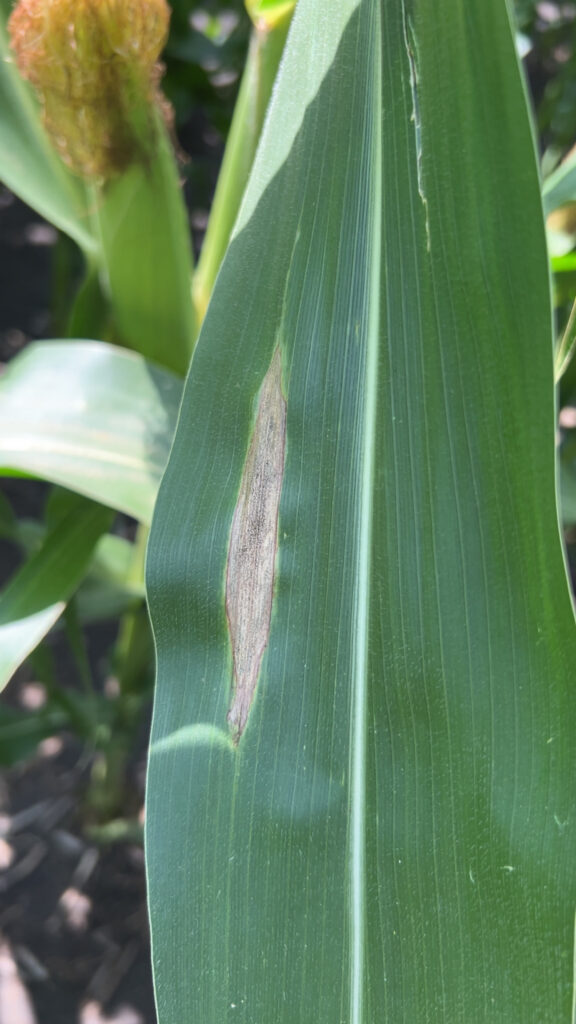
Corn rootworm pressure is down from last year, but Carter reports the pest is moving into some unexpected areas like southwest South Dakota. “Seeing corn rootworm move into this area is a reminder that pest issues don’t always stay where we expect them,” he says. “It underscores the importance of regular crop scouting.”
Through it all, Carter has been impressed with the corn crop’s stress tolerance. Areas that have been too dry have largely taken it in stride, and areas where wind accompanied rainfall have stayed upright.
South Dakota soybeans show solid yield potential
Soybeans looked really promising until a five-day stretch of 100-plus-degree Fahrenheit temperatures paired with some wind and hail hit in late July. “But soybeans are so responsive,” Carter says, noting the hot, windy stretch was followed by some rain and cooler temperatures.
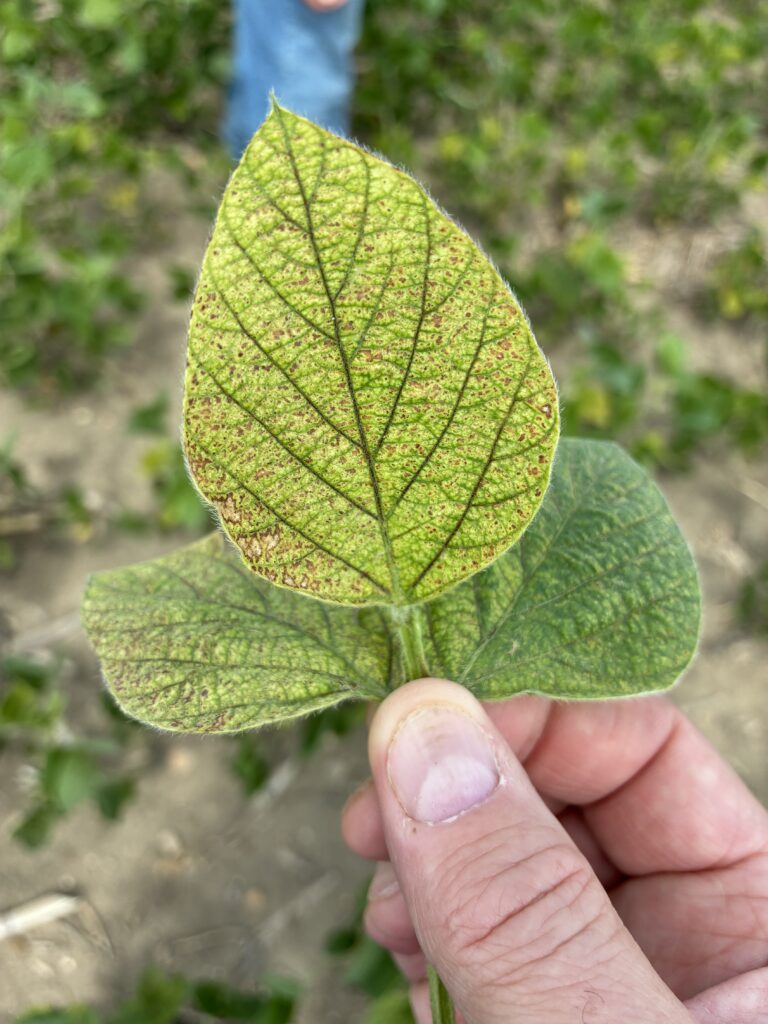
Some producers in northern areas of the state are dealing with white mold pressure, and iron deficiency chlorosis (IDC) has appeared in fields that haven’t had issues in the past. There’s also a bit of weed pressure in southern areas.
But all things considered, Cooper anticipates South Dakota’s 2026 soybean crop “will be pretty solid.”
Minnesota corn crop conditions split by region
Planting got off to an early but cool start in Minnesota, resulting in uneven emergence in some fields. Conditions the remainder of the season have varied widely.
“Minnesota is a huge state with a lot of different conditions and biomes,” Kuisle says. “Southeast Minnesota likely has some of the best-looking corn crop in Mustang Seeds’ four-state footprint.”
Up until late July, the corn crop looked “scary good” in Kuisle’s southeast corner of Minnesota. He’s in the garden spot of the state, where the crop has benefited from timely, favorable rains.
But August heat and humidity have brought an uptick in disease. “You don’t have to look too hard to find any of the usual suspects like northern corn leaf blight, tar spot, southern rust, anthracnose, bacterial leaf streak and even some southern corn leaf blight,” Kuisle says.
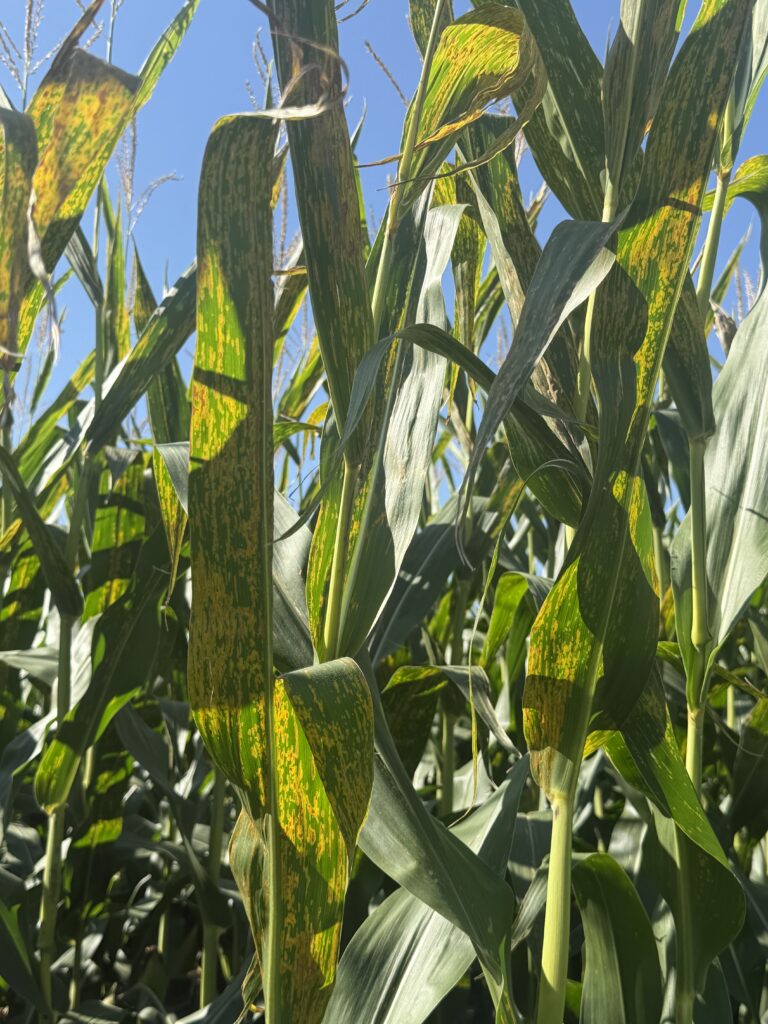
As you move farther north and west in the state, conditions have been more challenging, especially on lighter soils. Kuisle reports growers in the St. Cloud area are exceptionally dry, with some facing the toughest crop prospects they’ve seen since 2013.
Southeast Minnesota soybeans show promise
Node and pod development signal some of the best soybean yield potential Kuisle has ever seen for his territory.
There have been some pockets of white mold, sudden death syndrome, a bit of Fusarium and some early rhizoctonia — not surprising given the warmth and humidity this season. Some growers also opted for an insecticide pass to protect against soybean aphids.
But overall, the soybean crop looks strong, and some early August rain should help fill pods.
Scout through harvest to protect yield potential
From now until harvest, Carter says the most important thing is for growers to make sure they’re scouting fields for threats. “Drone images are great for telling a big story, but they don’t tell the whole story. Nothing beats boots on the ground for catching disease or insect threats early.”
Kuisle encourages growers to keep monitoring stalk quality since conditions are favorable for diseases like anthracnose. Beyond monitoring crops for issues and preparing for harvest, he encourages them to focus on marketing their grain.
In a season defined by variability, Carter and Kuisle agree that local insight will be key as growers make final in-season decisions and prepare for harvest. For guidance specific to your farm, connect with your local Mustang Seeds field agronomist.